

The Importance of Constructive Feedback
Effective feedback is an essential part of personal growth and professional development. It enables individuals and teams to leverage strengths and address weaknesses.
With Learned's FREE example template, you can renew and improve your feedback conversations. The start, stop & continue conversation is a modern alternative to evaluation meetings.
What Does the 4G Feedback Model Involve?
The 4G feedback model is a structured approach to giving and receiving feedback. The model consists of four essential elements: data, feelings, behavior, and desired outcome:
- Data: objective facts and observations about the person's behavior.
- Feelings: the emotions or reactions the behavior evoked in the feedback giver.
- Behavior: description of observed behavior, including examples.
- Desired outcome: clear expectations and suggestions for improvement.
Step-by-Step Plan: How to Use the 4G Feedback Model?
Applying the 4G feedback model is simple and effective:
Step 1: Gather data
Start by collecting objective data about the behavior you want to discuss. Be specific and use concrete examples.
Step 2: Express feelings
Share your feelings and emotions about the observed behavior respectfully. Focus on how the behavior affected you.
Step 3: Describe the behavior
Provide a detailed description of the behavior you observed. Be specific and avoid generalizations.
Step 4: Desired outcome and suggestions
Close by clearly stating your expectations for the person and what suggestions you have for improvement. Be positive and constructive.
Benefits of the 4G Feedback Model
The 4G feedback model offers several benefits:
- It promotes open communication and transparency.
- It reduces defensive reactions and conflicts.
- It provides a clear focus on behavior and improvement.
- It facilitates growth and development at personal and professional levels.
Practical Tips for Effective Feedback with the 4G Model
- Be empathetic and respectful when expressing feelings.
- Give feedback regularly, not only during formal reviews.
- Encourage open dialogue and be open to counter-feedback.
- Provide support and resources to stimulate improvement.
Integrate a Feedback Culture with Learned
Create a feedback culture and encourage managers and employees to exchange compliments and feedback year-round. Use real-time feedback as examples in your reviews.
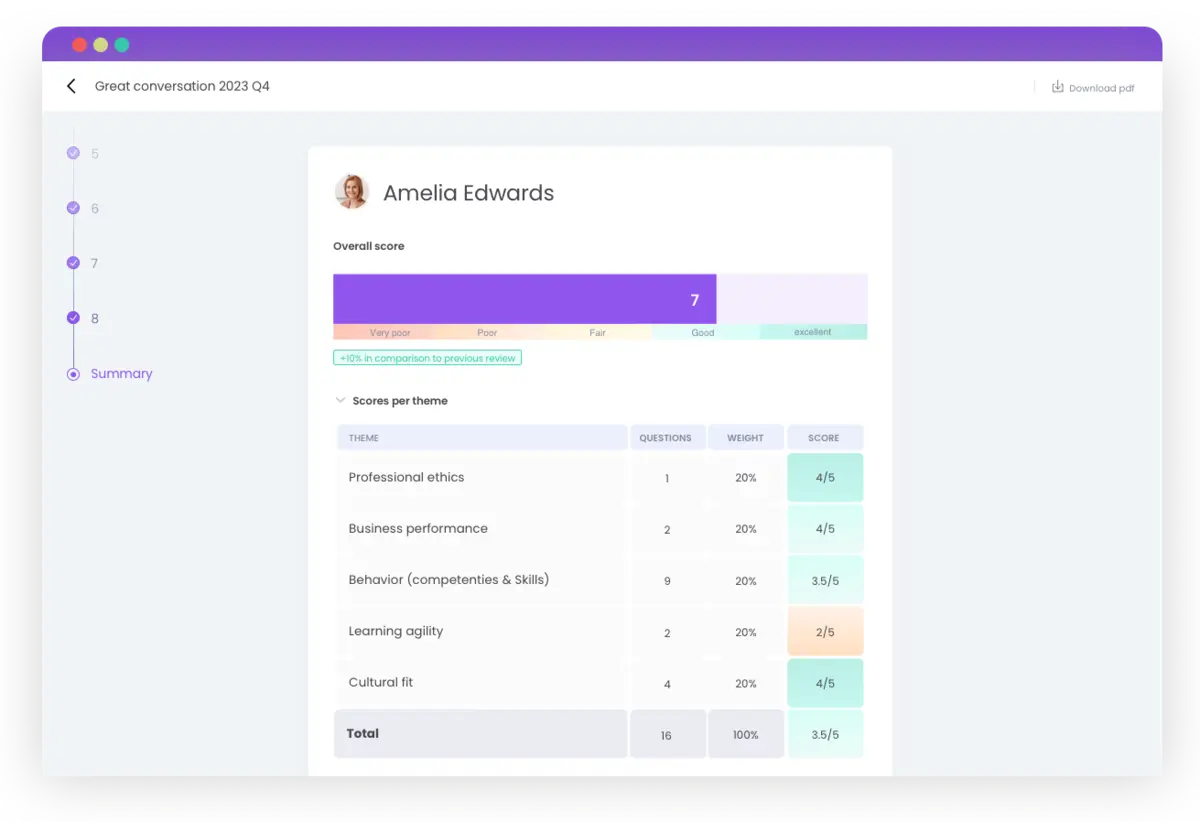
Learned facilitates objective evaluations through multiple measurement moments per year based on different themes.
Ontvang de nieuwste HR-tips
Krijg 1 keer per maand onze tips, e-guides en templates direct in je mail.

Related articles
Discover more about this topic