

Succession planning, although sometimes overlooked, is an essential part of any strategic HR policy. It is not a luxury, but rather a necessity in today's rapidly changing labor market. In this blog, we delve deeper into the meaning and importance of succession planning, what it entails, and how you can implement it to improve the future-readiness of your organization.
👉 Do you want to get started right away with identifying your internal top talent? Download our e-guide 'Mapping High and Low Performers'
What is succession planning?
Succession planning is a strategic process in which organizations prepare for future changes in leadership and management levels. It involves identifying, developing, and retaining talent within the organization to ensure that qualified internal candidates are available to fill key positions when needed.
The goal of succession planning is to ensure business continuity, improve performance, and prepare the organization for growth and change.
Why is succession planning important?
- Continuity: the sudden loss of a key leader can have devastating consequences for an organization. Succession planning ensures that a plan and qualified successors are ready to fill the gap and continue operations.
- Talent development: the succession planning process focuses on developing employee skills and leadership qualities. This not only increases the availability of internal candidates but also improves overall team performance.
- Motivation and engagement: employees who know there are opportunities for growth and promotion within the organization are more motivated and engaged. This leads to a positive work environment and lower turnover.
- Cost savings: hiring and onboarding external candidates can be expensive. Succession planning minimizes these costs by preparing internal candidates for leadership roles.
How do you implement an effective succession planning process?
- Identify key positions: start by identifying the key positions within your organization. These are roles whose loss would have a significant impact.
- Assess current talent: evaluate the existing workforce to identify potential successors. Look at skills, performance, and leadership qualities.
- Develop talent: offer development opportunities and training to employees to improve their leadership skills. This may include mentorship, coaching, and specific leadership training.
- Create a plan: establish a concrete succession plan with clear goals and timelines. Ensure all involved parties are aware of the plan and understand their roles in it.
- Keep evaluating: the succession planning process is dynamic and must be regularly evaluated and updated to meet changing needs.
Getting started with succession planning with Learned
Our platform offers tools for identifying talent, tracking ambitions, and connecting employees to internal opportunities. By integrating your own job levels into your review processes and evaluating based on skills and KPIs, you continuously gather insights to inform your succession plans.
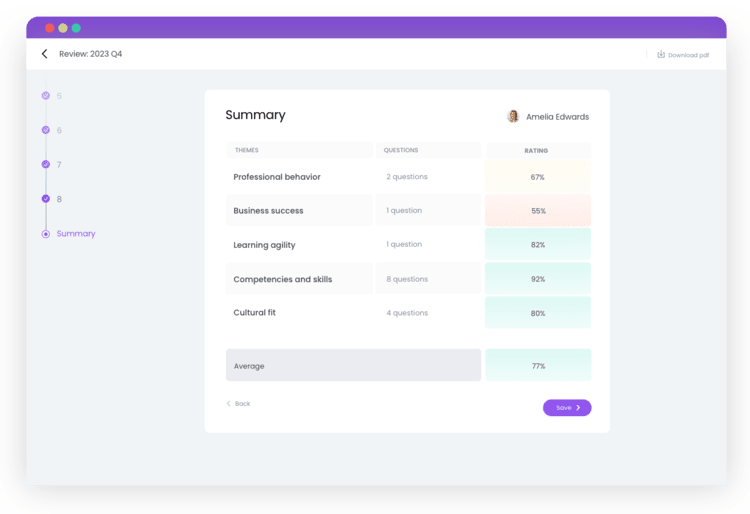
Image explanation: Each evaluation provides insight into how an employee scores on various themes.
With our Performance Management software, you ensure objective evaluations. By creating multiple measurement points per year based on different themes – for example, the fit with your culture and the achievement of goals – you gain objective insight into your low and high performers.
Ontvang de nieuwste HR-tips
Krijg 1 keer per maand onze tips, e-guides en templates direct in je mail.