

What is competency management?
Competency management is the process of identifying, assessing, and developing the skills and capabilities of employees within an organization. This aims to align these skills with the strategic goals of the company. Through competency management, organizations can help their employees grow and develop, improving their performance and contribution to the business. It also promotes employee engagement and satisfaction, resulting in higher retention and productivity.
💡 Want to get started with competency management right away? Download the e-guide 'Map high and low performers with objective evaluations'
What are the benefits?
Higher retention and engagement sounds great. But there are many more interesting benefits to implementing competency management. We have listed the most important ones for you.
- Increased productivity: competency management helps increase productivity by providing employees with the necessary skills and knowledge to perform their tasks efficiently.
- Improved employee satisfaction: by focusing on employee development, they feel more valued and engaged with the company, leading to higher satisfaction and retention.
- Better alignment with business goals: competency management ensures that employees' skills and capabilities are aligned with the company's strategic goals, contributing to the overall success of the organization.
Best practices for implementing competency management
Already convinced of the value of competency management? You can get started in your organization with these simple steps.
1. Define the competencies per role
The first thing to do is define the competencies needed for different roles within the organization. This can be achieved through job analysis and assessment of the company's strategic goals.
2. Map existing employee competencies
Determine which skills and knowledge employees currently possess. This can be done through assessments, surveys and individual meetings.
3. Identify the shortcomings or skills gap
After identifying current competencies, locate the shortcomings or the 'gap' in skills: the skills gaps. These are the competencies or skills that you need in your organization but that employees do not yet (sufficiently) master – and where they can further develop.
Knowing where the competency gap lies in your organization helps to offer the right training and development opportunities.
4. Create development plans
Based on the identified shortcomings, design specific development plans for employees. This can range from training, workshops, mentor programs and more.
5. Evaluate and adjust
Finally, after implementing the development plans, assess progress and adjust as needed. This ensures that your competency management program remains effective and continues to meet the needs of the organization and its employees.
What is the role of tooling in competency management?
Nowadays there is a digital solution for almost everything. The same applies to implementing competency management. There are various tools that help streamline and organize the entire process. With software tools you can map competencies, manage employee assessments, design training programs and track individual employee progress.
They can also help identify competency shortcomings, so organizations can see where training or development is needed. Moreover, advanced tools can provide analytical insights that help in making data-driven decisions.
Objective competency management at Learned
With Learned's AI-driven career framework, you provide all your employees with the relevant skills and competencies for their role. By making these role profiles an integral part of your Performance Management cycle, you continuously collect new data and insights into the available skills in your organization.
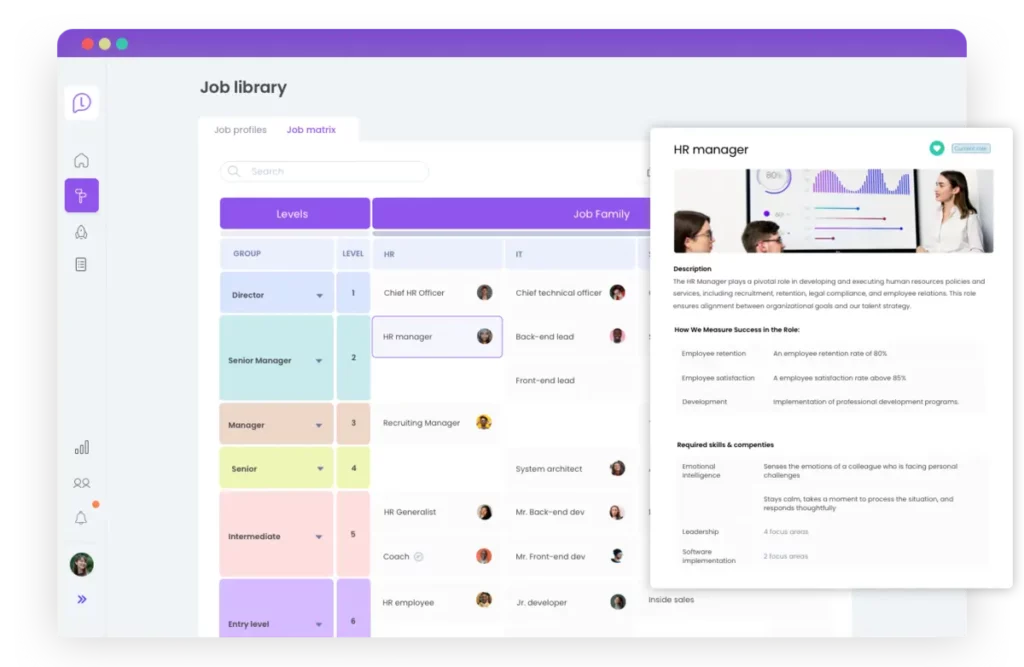
With Learned's AI, you easily generate a modern job architecture based on market data. This makes evaluations objective and growth opportunities transparent. Try Learned free for 14 days!
Ontvang de nieuwste HR-tips
Krijg 1 keer per maand onze tips, e-guides en templates direct in je mail.