
What is People Analytics?
People Analytics, also known as HR analytics or workforce analytics, is the practice of collecting, analyzing, and interpreting data related to an organization's workforce. This includes data on recruitment, turnover, performance, engagement, satisfaction, and more. The goal is to gain insights that HR departments can use to make more effective strategic decisions and improve organizational performance.
Why is this important?
People Analytics is an essential tool for modern organizations to strengthen their HR strategies. It provides deep insight into the organization by analyzing the workforce. This insight goes beyond just numbers and enables HR teams to predict future trends, such as potential turnover or performance issues. Additionally, it contributes to cost savings by leveraging data to optimize HR processes. It is also indispensable for effective talent acquisition, identifying the best channels and strategies to attract top talent. Finally, it improves performance management by providing insight into the factors that influence performance, leading to more effective evaluations and development plans.
How does People Analytics work?
People Analytics involves several steps:
- Data Collection: It begins with gathering relevant HR-related data, such as personnel information, performance reviews, and absenteeism data.
- Data Analysis: Advanced analytical techniques, such as data mining and predictive modeling, are used to identify patterns and trends in the data.
- Insight Generation: The data is translated into actionable insights that HR teams can use to make decisions.
- Decision-making and Action: Based on these insights, HR professionals can make strategic decisions and take action to improve the organization.
Best practices
- Clear objectives: Define clear objectives and questions you want to answer using People Analytics.
- Data integrity: Ensure that you collect reliable and up-to-date data.
- Privacy and security: Protect employee privacy and ensure strict security measures for sensitive data.
- Continuous evaluation: Regularly evaluate the effectiveness of People Analytics initiatives and adjust them if necessary.
In short, People Analytics is not just an HR tool, but a strategic asset for organizations. By using data to make more informed decisions about personnel, companies can optimize their performance, retain talent, and adapt to a rapidly changing labor market. It is the future of HR management.
Fully leveraging the potential with Learned's advanced HR software
Our platform offers powerful tools for collecting, managing, and analyzing workforce data, enabling HR teams to gain deep insights into the performance, engagement, and needs of their employees. By integrating People Analytics into daily HR management, Learned enables organizations to make data-driven decisions and optimize their workforce policies, resulting in a more effective and agile organization. With Learned, companies can gain a competitive edge in attracting, developing, and retaining top talent.
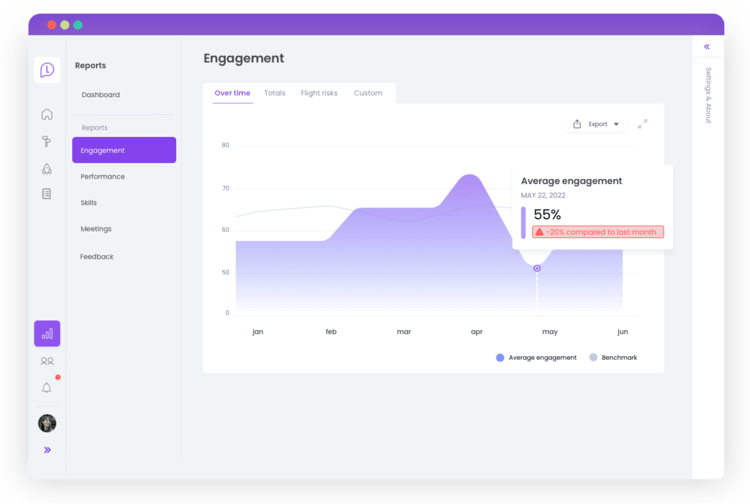
With Learned, you implement ongoing short pulse surveys with just a few questions per week in the same time as an annual employee survey. This way, you maintain real-time insight into employee engagement throughout the year and can immediately see the effect of your HR initiatives.
Image explanation: In this example, you can see the power of continuous short pulse surveys. Due to a negative situation in April, you can see a sharp decline in employee engagement in May. Thanks to the frequent measurements, you can take immediate action.
Ontvang de nieuwste HR-tips
Krijg 1 keer per maand onze tips, e-guides en templates direct in je mail.