

Hybrid working, combining working from home and working at the office, has become increasingly popular since the pandemic. The benefits of hybrid working, such as flexibility, cost savings, and better work-life balance, have contributed to growing interest. However, there are also challenges, such as communication, technology, and maintaining a strong company culture. For organizations looking to implement hybrid working, a well-thought-out step-by-step plan helps ensure a smooth transition. By carefully weighing both the advantages and disadvantages, hybrid working can be a valuable addition to business operations and an investment with potential for the future. Want direct insight into your organization's engagement? Download our free e-guide here.
What is hybrid working?
Hybrid working encompasses the concept where employees have the freedom to work independently of time and location. Usually a mix of working from home and working at the office is used.
Before the pandemic, working from home was usually the exception. However, in 2020, remote working suddenly became the norm as a result of mandatory measures during the pandemic. The benefits of mandatory working from home quickly became apparent, such as eliminating commute times and more flexible working hours, allowing work to be better combined with private life. These benefits have led to a significant increase in the popularity of hybrid working after the coronavirus pandemic.
How does hybrid working stand today
Research shows that less than half of organizations (48 percent) still have not prepared for hybrid working. About 37 percent indicate they have embraced hybrid working only for the short term. Furthermore, 52 percent of organizations think hybrid working is only a temporary matter.
Important perspectives emerge from the group of companies actively working on hybrid working, including:
- 80% of employees have the right to work flexibly from day one.
- 84% of employees receive rules about the number of mandatory office days.
- 22% of employees work at the office sporadically, enabling space savings.
What are the benefits?
Hybrid working offers numerous benefits for both employers and employees. Some key benefits are:
- Flexibility: Hybrid working gives employees the freedom to adapt their workplace and hours to their personal needs, promoting a better work-life balance.
- Cost savings: Both employees and employers can benefit from cost savings. Employees save on commuting costs while employers may need less office space.
- Access to talent: Hybrid working allows organizations to attract and retain talent regardless of their location.
- Higher engagement: Flexible working conditions can increase employee engagement.
- Improved productivity: For some employees, working in a familiar environment can lead to increased productivity.
- Work-life balance: Hybrid working helps employees better balance work and personal life.
- Sustainability: Less commuting can contribute to reduced CO2 emissions.
- Increased employee satisfaction: Offering flexible work options shows that employers take employee well-being seriously.
What are the drawbacks?
However, it is important to note that hybrid working can also bring challenges, such as the need for effective remote communication and collaboration, ensuring data and information security, and maintaining a consistent company culture. Below we discuss the main challenges.
1. Communication and collaboration
It can complicate communication and collaboration between team members, especially when some colleagues work at the office while others are remote. It is important to implement effective communication channels and collaboration methods to ensure all team members stay engaged.
49 percent of employees experience that employers take no steps to prevent them from always having to be reachable and available. (HP 2022)
2. Technology and infrastructure
A successful hybrid work environment requires robust technology and infrastructure to enable seamless communication and collaboration. Ensuring the right equipment, internet connections, and security measures for both office and home workplaces can be challenging.
3. Work-life balance
While hybrid working can contribute to better work-life balance, it can also lead to blurring the boundaries between work and private life. Employees may have difficulty letting go of work-related tasks when working from home, potentially becoming overloaded.
49 percent of employees worry about an unhealthy overwork culture. (HP 2022)
4. Company culture and engagement
Maintaining a strong company culture and promoting team engagement can be more difficult when employees work remotely. It is important to implement initiatives that promote team spirit, even when not all team members are physically present at the office.
74 percent of employers worry about creating and supporting a work culture with remote working. (HP 2022)
5. Performance assessment
Evaluating employee performance in a hybrid work environment can be challenging. It is important to establish objective assessment criteria and ensure that performance is evaluated fairly and balanced, regardless of work location.
Learned helps you conduct fair and objective evaluation conversations on themes such as: cultural fit, KPIs, the job profile, and relevant skills & competencies.
6. Security and privacy
With employees working remotely, concerns about data security and privacy can arise. Organizations must ensure that sensitive information is well protected and that employees are aware of the risks and best practices regarding cybersecurity.
7. Inclusivity
Ensuring inclusivity can be challenging in hybrid working. Remote employees must have the same opportunities and access to development possibilities and decision-making processes as those working at the office.
To address these challenges, organizations must invest in effective technologies, communication channels, and leadership skills. Clear policies and guidelines for hybrid working can also help facilitate a smooth transition.
Examples of companies that have implemented hybrid working
Two examples of companies that have embraced hybrid working.
- Microsoft: As one of the leading technology companies, Microsoft has embraced a hybrid work environment. They have given their employees the option to work flexibly from home while having access to modern tools and technologies for seamless remote collaboration.
- Salesforce: Salesforce has adopted a hybrid work approach they call "Work From Anywhere." They have given their employees the flexibility to choose where they can be most productive.
Learned: We also work hybrid
At Learned, employees work 3 days a week from the office and 2 days a week from home. We believe it is important for team spirit that we spend enough time together in the office. In addition, we also find it important to enable employees to work independently on projects and minimize their travel time.
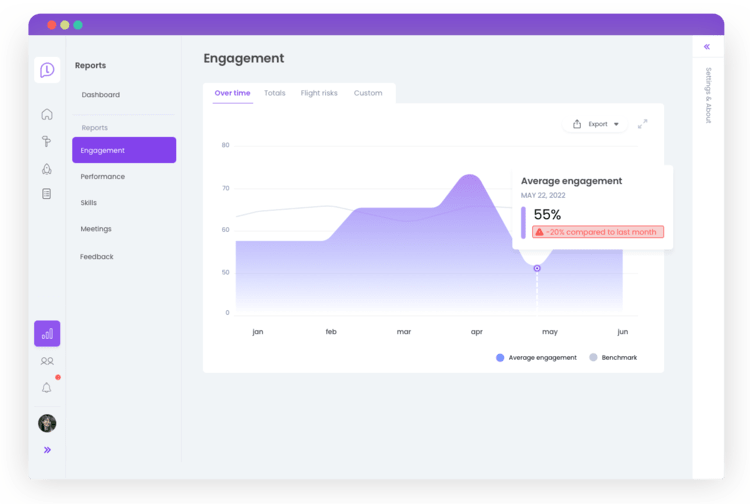
With Learned, you can implement continuous short employee surveys with a few questions per week in the same time it takes for an annual employee survey. This way, you maintain real-time insight into your employee engagement throughout the year and immediately see the effect of your HR initiatives. Try Learned now for 14 days free!
Image explanation: This example shows the power of continuous short employee surveys. Due to a negative situation in April, you see a sharp drop in employee engagement in May. The frequent measurements allow you to take immediate action.
Step-by-step plan to implement hybrid working
Implementing hybrid working can be a complex process, but with a well-thought-out step-by-step plan you can make it run smoothly. Here is a general step-by-step plan to introduce hybrid working within an organization:
Step 1: Analysis and preparation
- Conduct a thorough analysis of the current work culture, employee needs, and the nature of the work being performed.
- Determine which roles are suitable for hybrid working and identify potential bottlenecks or challenges.
- Form a working group with representatives from various departments to guide the implementation process.
Step 2: Policy formation and communication
- Develop clear policies and guidelines for hybrid working, covering working hours, office days, allowances, technology support, and expectations around productivity and communication.
- Communicate the policies and guidelines transparently and clearly to all employees.
Step 3: Technology and infrastructure
- Invest in the necessary technology and infrastructure to enable hybrid working.
- Ensure the security and privacy of company data when working remotely.
Step 4: Training and support
- Provide employees with training and support in using new technologies and remote working.
- Ensure managers are trained in managing hybrid teams and promoting effective communication.
Step 5: Test phase and feedback
- Run a pilot phase with a small team to test hybrid working and identify any issues.
- Collect feedback from employees and managers to further optimize the process.
Step 6: Gradual implementation
- Implement it gradually in the organization, incorporating lessons learned from the pilot phase.
- Monitor progress and results.
Step 7: Evaluation and adjustment
- Evaluate regularly and adjust policies as needed.
It is important to recognize that implementing hybrid working is a continuous process.
In summary, should I as an employer start with hybrid working?
As an employer, it is crucial to consider the needs and wishes of your employees and determine if it fits your company's culture and objectives. While hybrid working can increase employee satisfaction and productivity, this model also brings challenges in communication and team building. It is very important to carefully weigh both the advantages and disadvantages. Based on this evaluation, you can then decide whether hybrid working can be a valuable addition to your business operations and an investment with potential for the future.
Ontvang de nieuwste HR-tips
Krijg 1 keer per maand onze tips, e-guides en templates direct in je mail.