

The career conversation offers employees the opportunity to reflect on their career, set goals, and take the necessary steps to achieve results. In this blog, we will discuss what a career conversation is and how to conduct it effectively, including some example questions from our template.
👉 Curious about all example questions? Download this free template for conducting an effective career conversation
What is a career conversation
A career conversation, also known as a development, performance, or evaluation meeting, is a discussion between an employee and their manager about development, objectives, and competencies.
It offers employees the opportunity to discuss their strengths and development wishes and helps identify growth opportunities. It is also a moment to receive feedback and discuss strategies for further professional development.
This way, a career conversation contributes to both employee growth and organizational success.
How do you conduct a career conversation?
A good career conversation requires an open and structured approach. Both the employee and the manager play an active role in this. By asking the right questions and creating a safe atmosphere, a valuable conversation emerges that contributes to growth and development.
Want to conduct an effective career conversation? Below we share best practices to make the conversation smooth and impactful 👇
Best practices for career conversations
Career conversations play a crucial role in the professional development of employees and in achieving organizational goals. Here are some best practices to ensure career conversations are effective:
1. Preparation
Both the employee and the manager should prepare well for the conversation. This includes reviewing performance evaluations, goals, and development plans.
2. Open communication
Encourage open and honest communication. Employees should feel comfortable sharing their goals, concerns, and feedback.
3. Goal orientation
Set clear goals and expectations for the conversation. What should be achieved and what results should be documented?
4. Listening
Managers should actively listen to what employees have to say. Understand their needs and goals before giving advice or feedback.
5. Feedback
Give constructive feedback focused on growth and improvement. Both positive and negative feedback should be given in a balanced way.
6. Development plans
Work with the employee on a development plan that contains concrete steps to achieve goals and improve skills.
7. Follow-up
Ensure follow-up after the conversation to monitor progress and ensure actions are taken.
8. Documentation
Keep accurate records of career conversations and development plans. This can be useful for later evaluations.
9. Flexibility
Be flexible and adjust career plans as circumstances change.
10. Continuous cycle
Career conversations should be an ongoing cycle, not a one-time event. Regular follow-up and revision of goals and plans are essential.
By applying these best practices, organizations can conduct effective career conversations that promote the growth and development of their employees, ultimately contributing to the success of the organization.
Example questions for the career conversation
To conduct a transparent and useful career conversation, it is important to ask the right questions.
This gives team members insight into the themes that influence their evaluation, and you can guide them on concrete points they can improve.
At Learned, we use 5 themes that form the guideline for an objective, transparent career conversation: job satisfaction, performance, development, learning goals, and feedback about the organization.
These are the best questions to ask per theme 👇
Job Satisfaction
- How did you experience the workload in the past period?
- What were the most inspiring projects and/or activities that gave you the most energy?
Performance
- What are 3 achievements you are proud of?
- What were the biggest hindering factors for your learning goals and how did you resolve them?
Development
- Which talent do you want to further develop in the coming period?
- What new skills do you want to learn in the coming period?
Learning Goals
- What are your three biggest learning goals from the past period and did you achieve them?
- Will your learning goals for the upcoming period remain the same?
Continuous Improvement
- What would you like to see improved within the organization, and how?
- Describe the collaboration with your manager/team/direct colleague in 3 words and indicate in which areas collaboration can be improved.
More example questions and practical tips can be found in this free template for an evaluation conversation 👇
Optimize career conversations for growth and development
With Learned, you can conduct efficient and structured career conversations. The platform offers tools and templates to set goals, track performance, and create development plans. This enables organizations to effectively manage and support the growth and development of their employees.
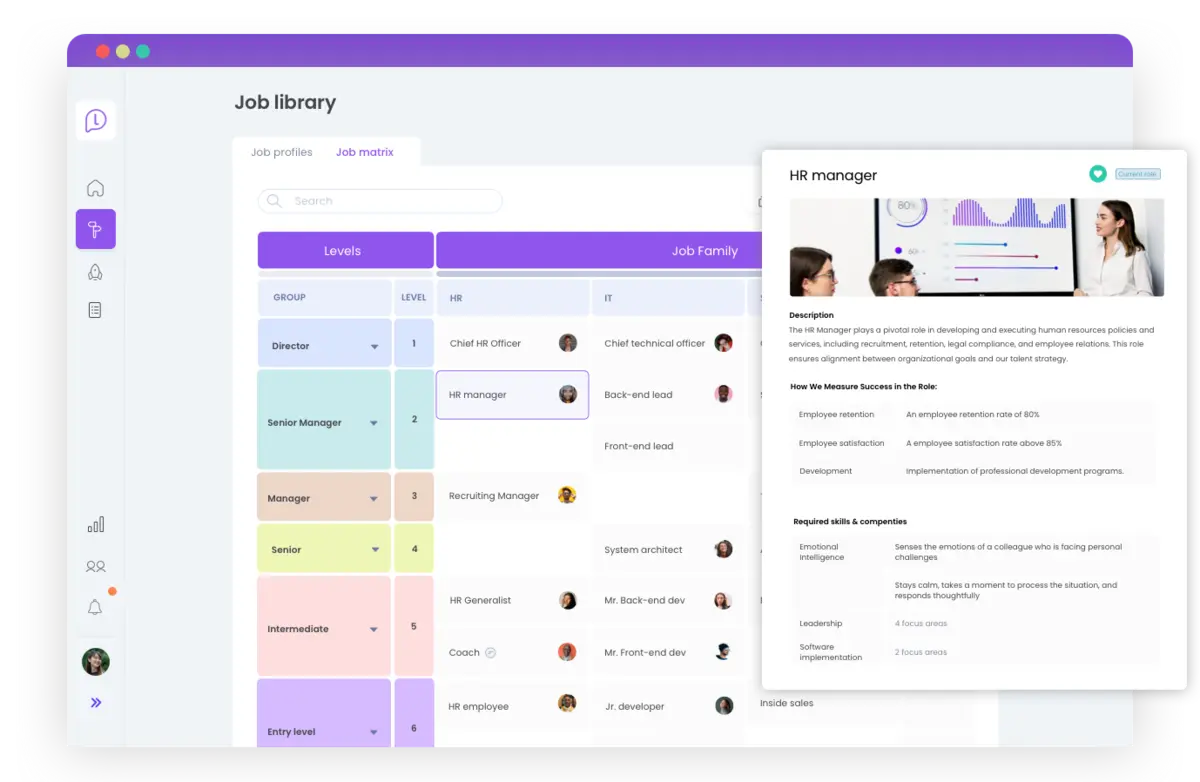
Make your evaluations objective and growth opportunities transparent. Easily build a job architecture with Learned.
Ontvang de nieuwste HR-tips
Krijg 1 keer per maand onze tips, e-guides en templates direct in je mail.