

Employment conditions form the core of the relationship between employers and employees. They encompass a wide range of benefits, rights and obligations set out in employment contracts and collective labor agreements (CLAs). In this blog we dive deeper into the meaning, examples and importance of employment conditions, as well as the process of conducting salary negotiations.
Prefer to get started right away with our template for salary negotiations? Download our free template including questions for the negotiation!
Meaning of employment conditions
Employment conditions refer to the agreements and arrangements between employers and employees regarding the employment relationship. They include matters such as salary, working hours, vacation days, pensions, sick leave, leave arrangements, flexible working arrangements and other secondary employment conditions.
These conditions can vary depending on the sector, the company and individual agreements between employer and employee. Compliance with employment conditions is essential to maintain a fair and mutually beneficial working relationship.
Employment conditions examples
Some common examples of employment conditions are:
1. Salary and bonuses:
The base income an employee receives for work performed, including any bonuses or performance-related rewards.
2. Working hours and flexibility:
The set working hours, overtime arrangements, flexible working hours, remote working options and other arrangements regarding working hours.
3. Vacation days and leave:
The number of vacation days, paid leave, parental leave, sick leave and other types of leave arrangements employees are entitled to.
4. Pensions and insurance:
Pension schemes, health insurance, disability insurance and other insurance benefits offered by the employer.
5. Development opportunities:
Training, education, career development programs and other opportunities for professional growth and development.
6. Work environment and facilities:
The work environment, office facilities, ergonomic provisions and other aspects that influence working conditions.
Legislation regarding employment conditions
In addition to negotiations between employers and employees, the establishment of employment conditions is also influenced by legal regulations and provisions. This legislation is intended to protect employees' rights and ensure fair working conditions.
Complying with labor laws is not only mandatory, but also contributes to employee well-being and satisfaction, which in turn can lead to a more productive and healthier work environment. Some laws to consider when drafting employment conditions are:
1. Minimum Wage and Minimum Holiday Allowance Act (WML):
This law establishes the minimum wage that employers are required to pay their employees. The minimum wage is adjusted annually and depends on the employee's age.
2. Working Hours Act:
This law contains rules regarding maximum working hours, rest periods and breaks for employees. The purpose is to ensure employees get sufficient rest and to safeguard health and safety in the workplace.
3. Work and Care Act (WAZO):
This law regulates various forms of leave, such as maternity leave, paternity leave, parental leave and adoption leave. Employees are entitled to these forms of leave under certain conditions.
4. Working Conditions Act (Arbowet):
This law sets requirements for workplace safety and health. Employers are required to implement an occupational health and safety policy and take measures to prevent or limit work-related health risks.
5. Equal Treatment Act (WGB):
This law prohibits discrimination based on gender, race, age, disability or sexual orientation in employment. Employers must promote equal treatment and equal opportunities within their organization.
Compliance with these laws is essential for employers to avoid legal problems and to ensure a fair and safe working environment for all employees in the Netherlands.
Employment conditions negotiation
The employment conditions negotiation is a crucial step in the hiring process where employers and employees negotiate the specific terms of the employment agreement. During this conversation, both employers and employees can discuss their expectations, needs and wishes regarding salary, secondary employment conditions and other aspects of the job. It is important that both parties communicate openly and strive for a balanced and satisfying agreement that meets the interests of both the employer and the employee.
Employment conditions form an essential part of the work relationship and play a major role in attracting, retaining and motivating talent. By making clear and fair agreements about employment conditions, employers and employees can lay a solid foundation for a successful and productive collaboration.
FAQ
1. How can employees ensure their employment conditions comply with applicable legislation in the Netherlands?
Employees can ensure their employment conditions comply with applicable legislation in the Netherlands by being aware of their rights and consulting relevant laws. They can also seek legal advice or contact trade unions for support in safeguarding their employment conditions.
2. What role do collective labor agreements (CLAs) play in establishing employment conditions, and do they apply to all employees in the Netherlands?
Collective labor agreements (CLAs) play an important role in establishing employment conditions in various sectors in the Netherlands. These agreements are negotiated between employer organizations and trade unions and contain agreements on salaries, working hours, leave arrangements, and other employment conditions. CLAs generally apply to all employees within a specific industry or sector.
3. How can employers and employees best handle employment condition negotiations to reach a balanced and satisfying agreement that meets the interests of both parties?
The best approach to employment condition negotiations requires open communication and a constructive attitude from both employers and employees. Employees can clearly express their expectations and needs and be prepared to negotiate. Employers, in turn, can offer transparency about available employment conditions and show flexibility to reach a satisfying agreement.
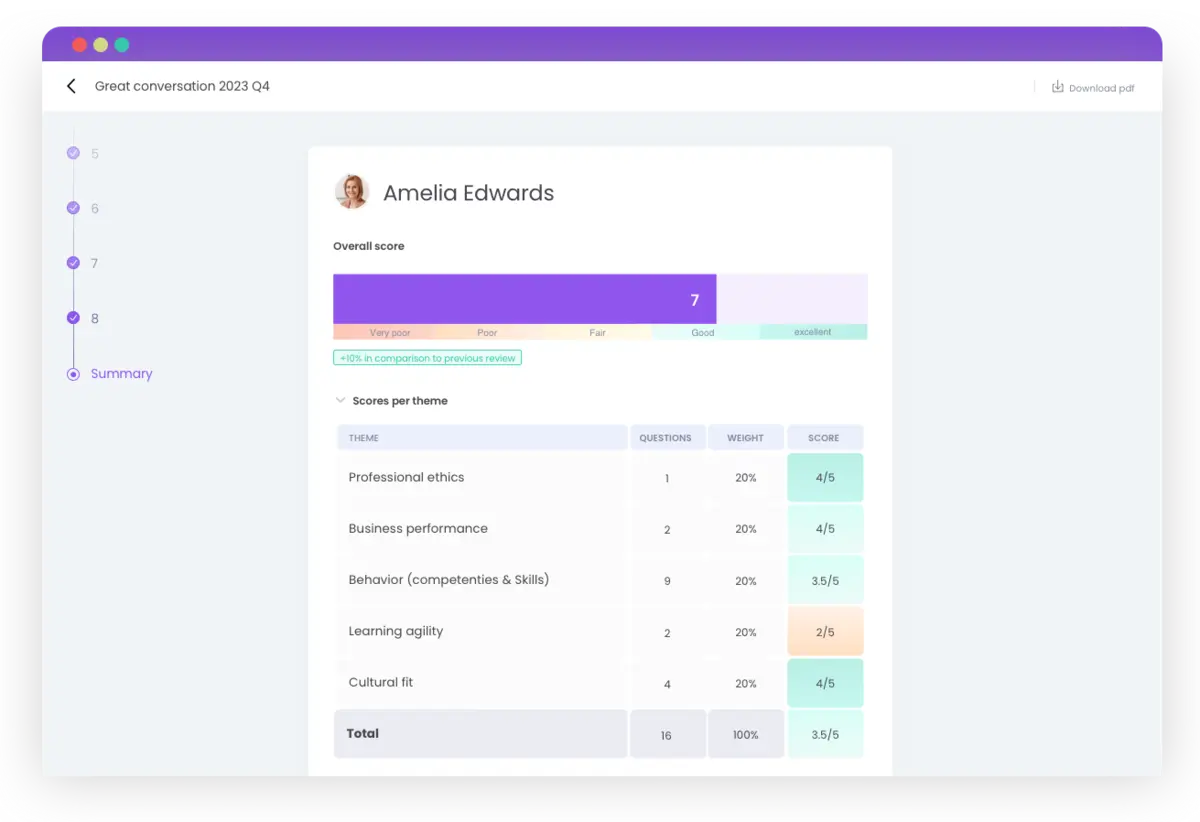
Want to know how to conduct good employment condition negotiations? Try Learned free for 14 days and find out!
Ontvang de nieuwste HR-tips
Krijg 1 keer per maand onze tips, e-guides en templates direct in je mail.