

What is a communication plan?
A communication plan is a strategic document. It describes the guidelines, goals and tactics for effective communication within an organization. This plan provides a structured framework for planning, executing and evaluating communication activities. It identifies the target audience, determines the message, selects suitable communication channels and measures communication effectiveness.
Why is this plan important?
An effective communication plan is invaluable for an organization for several reasons. First, it promotes engagement and trust between employees and management. Transparent and consistent communication ensures employees feel more connected to the organization. This leads to higher satisfaction, motivation and loyalty.
Additionally, a communication plan improves internal collaboration and resolves conflicts. Open communication channels make it easier for employees to exchange information, share ideas and solve problems. This increases productivity and efficiency.
Moreover, a good plan helps clearly communicate business objectives. It ensures all employees move in the same direction. This promotes a sense of direction and purpose within the organization, essential for long-term success.
How can a communication plan improve an organization's performance?
An effective communication plan improves organizational performance in several ways. First, it promotes a positive company culture centered on openness, transparency and collaboration. This leads to higher satisfaction and engagement among employees, which in turn leads to higher productivity and lower employee turnover.
Additionally, a communication plan helps identify and solve problems before they escalate. Effective communication channels enable employees to discuss and resolve problems before they negatively impact the organization.
Furthermore, a good communication plan helps retain and attract talent. Organizations known for transparent and effective communication are more attractive to potential employees and enjoy higher loyalty from existing employees.
Example communication plan
Here is a brief example of a communication plan for a fictitious organization, XYZ Company.
Objectives:
- Improving internal communication between employees and management.
- Increasing employee engagement and satisfaction.
- Clear communication of business objectives and strategies.
- Improving external communication with clients and stakeholders.
Strategies and tactics:
- Regular meetings and updates: Monthly meetings where management informs employees about recent developments, performance and company objectives.
- Internal newsletter: A monthly newsletter with important updates, announcements and successes within the organization.
- Open door policy: Management is open to questions, suggestions and feedback from employees and encourages them to communicate regularly with their managers.
- Intranet platform: An online platform for sharing documents, policy information and other important company information.
- Social media: The company uses social media channels to promote external communication.
Responsibilities and planning:
- The HR department coordinates internal communication activities, prepares newsletters and organizes meetings.
- The marketing team manages external communication activities, such as managing social media channels and developing marketing materials.
- The communication team develops strategies, monitors the effectiveness of communication activities and adjusts the communication plan as needed.
- A schedule records the frequency and timing of communication activities, along with the responsibilities of each team member.
Monitoring and evaluation:
- Regular evaluations measure the effectiveness of the communication plan using KPIs such as employee engagement, satisfaction and responses to communication activities.
- Feedback is collected from employees through surveys, focus groups and individual meetings.
- Based on the evaluation results, adjustments and improvements are made to optimize the communication plan.
This example illustrates how an organization can implement concrete strategies and tactics to promote effective communication and achieve its objectives.
Measuring the impact of the communication plan?
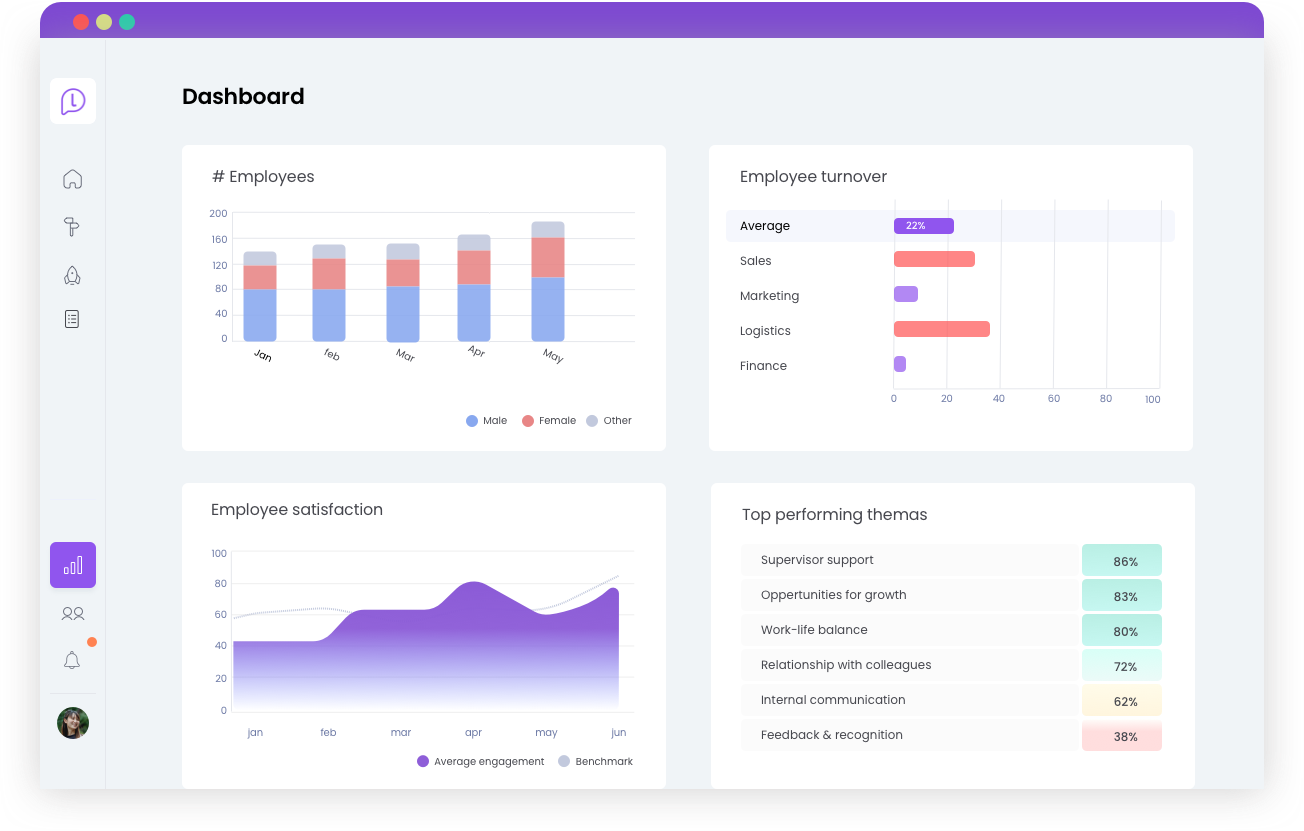
With Learned's software you easily gain insight into KPIs such as employee engagement, satisfaction and performance. Have you just implemented a communication plan or is it planned soon? Try Learned free for 14 days and discover how easy it is to measure results.
FAQ
1. How can I adapt a communication plan to the specific needs and culture of my organization?
Adapting a communication plan to the specific needs and culture of an organization requires a thorough analysis of the target audience, business objectives and existing communication channels. It is important to consider the unique characteristics and challenges of an organization to make the plan effective.
2. What steps can I take to measure and evaluate the effectiveness of a communication plan?
The effectiveness of a communication plan can be measured using various KPIs, such as employee engagement, satisfaction scores, communication response speed, and the achievement of predetermined objectives. By conducting regular evaluations and collecting stakeholder feedback, the impact of the plan can be assessed.
3. Are there examples of organizations that have succeeded in implementing a communication plan?
There are many examples of organizations that have succeeded in implementing communication plans. Important lessons include:
- The importance of clear objectives.
- Regular and open communication.
- Involvement of all stakeholders.
- Flexibility to adapt the plan to changing circumstances.
Ontvang de nieuwste HR-tips
Krijg 1 keer per maand onze tips, e-guides en templates direct in je mail.