

Preparing for a performance review is a crucial part of the appraisal process within many organizations. It offers both employees and employers the opportunity to discuss the employee's performance, goals, and development needs.
To get the most out of a performance review and communicate effectively, it is important to prepare well. Here you will find concrete steps and tips to conduct a performance review well-prepared and with confidence.
👉 Ready to get started? Download our template with 20 example questions for a performance review
The importance of preparing for the performance review
A well-prepared performance review can make the difference between a strong dialogue that promotes the employee's growth and development and a superficial exchange of feedback. By spending time before the conversation on self-reflection, gathering relevant information, and setting goals, you can ensure the conversation is productive.
Steps to prepare
For employers
1. Performance assessment: Take the time to objectively assess the employee's performance. Check whether the employee has achieved the set goals and how their performance relates to the company's expectations.
2. Gather feedback: Collect feedback from colleagues, other supervisors, and possibly clients about the employee's performance. This helps to get a complete picture of the employee's strengths and development needs.
3. Identify development opportunities: Identify opportunities for further development and growth of the employee within the company. Discuss these opportunities during the performance review and set concrete action plans to support development.
4. Prepare documentation: Gather relevant documentation, such as performance reviews, training schedules, and feedback from colleagues, to support the performance review. Ensure you have these documents organized and easily accessible during the conversation.
5. Promote open communication: Ensure the performance review facilitates an open and honest dialogue between you and the employee. You do this primarily by asking the right questions.
Also encourage your team member to share thoughts, concerns, and goals, and offer constructive feedback and support where needed.
For employees
1. Self-evaluation: Take the time to honestly evaluate your own performance. Identify your strengths, areas for improvement, and any obstacles you have encountered. Think about specific examples that support your evaluation.
2. Set goals: Check whether you have achieved the goals set during previous performance reviews or annual evaluations. Formulate new goals for the coming period and think about how you can achieve them.
3. Gather feedback: Collect feedback from colleagues, supervisors, and possibly clients. This can help you get a complete picture of your performance and identify any blind spots.
4. Prepare documentation: Gather relevant documentation, such as project reports, performance reviews, training certificates, and other documents that support your performance. Ensure you have these documents organized and easily accessible for the conversation.
5. Prepare questions: Think about questions you want to ask your supervisor during the conversation. These can be questions about your development path, opportunities within the company, or feedback on specific projects.
Tips for a well-prepared performance review
1. Start early: Give yourself enough time to prepare for the performance review. Don't wait until the last moment, but plan ahead so you can reflect calmly and gather all necessary documentation.
2. Be honest and open: Both employers and employees should be honest and open during the performance review. Be willing to discuss both successes and challenges and be open to constructive feedback.
3. Listen actively: Listen carefully to the other party's viewpoints and feedback. Ask clarifying questions and show genuine interest in each other's perspective.
4. Focus on solutions: Instead of only pointing out problems, focus on finding solutions and setting concrete action plans to address challenges and achieve goals.
5. Set realistic goals: Both employers and employees should set realistic goals that are achievable within a certain period. Be specific and measurable when formulating objectives to effectively track progress.
By following these concrete steps and tips, both employers and employees can effectively prepare for the performance review and facilitate a strong dialogue about performance, goals, and development needs.
Make performance reviews more motivating with Learned
At Learned, we also advise our clients to strive for a continuous dialogue. By continuously engaging in conversations with your employees as a manager, we see that employees better understand how they can contribute to the organization and more actively engage in their development.
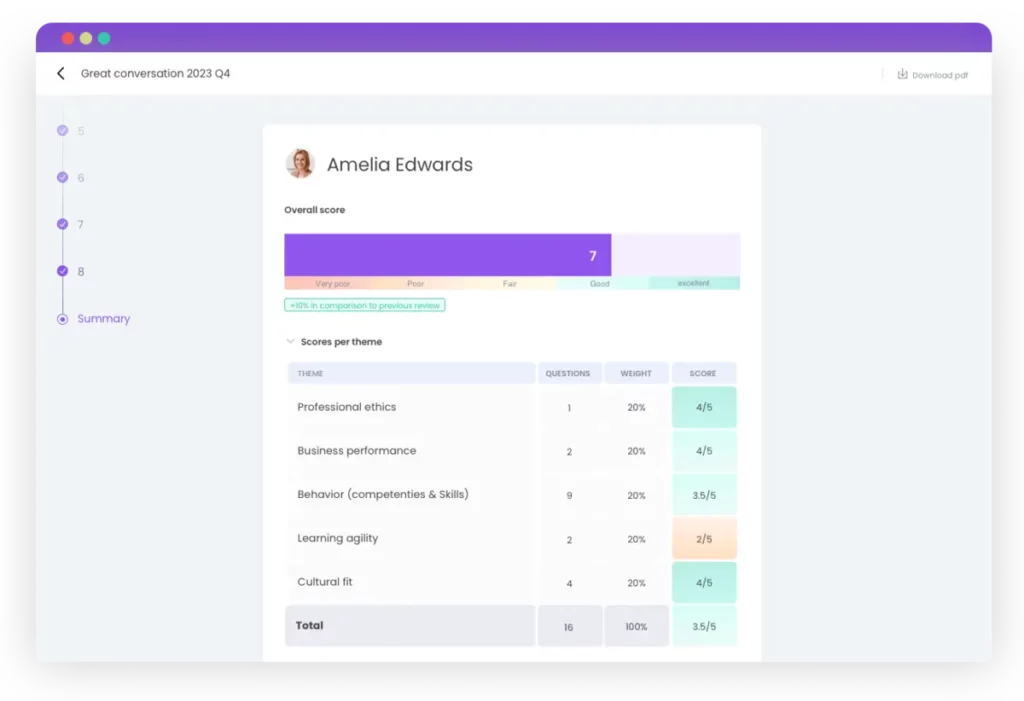
Learned can help you with the transition from gut feeling to data-driven evaluations. This gives you real-time insight into your employees' performance and prevents turnover. Try Learned free for 14 days.
Ontvang de nieuwste HR-tips
Krijg 1 keer per maand onze tips, e-guides en templates direct in je mail.

Related articles
Discover more about this topic