

HR automation refers to the use of technology, such as software and AI, to perform various HR processes more efficiently and accurately. This includes tasks such as recruitment, onboarding, payroll, performance management and reporting.
By automating repetitive and time-consuming tasks, you can focus on more strategic tasks and improving employee engagement. HR automation can also provide data-driven insights to better attract and retain talent. It enables your organization to optimize their HR processes and increase the overall productivity and effectiveness of the HR department. Read on to discover the benefits and applications of HR automation.
Take your HR cycle to the next level! Download our free e-guide to design a modern HR cycle yourself
What is HR Automation?
HR automation refers to the use of technology, such as software and AI, to perform various HR processes more efficiently and accurately. This includes tasks such as recruitment, onboarding, payroll, performance management and reporting. By automating repetitive and time-consuming tasks, HR professionals can focus on strategic decision-making and improving employee engagement. HR automation can also provide data-driven insights to better attract and retain talent. It enables organizations to optimize their HR processes and increase the overall productivity and effectiveness of the HR department.
Examples of HR Automation
Automating HR processes is quite broad and can be applied in various ways within the organization. Whether it concerns processes for hiring new employees or developing your current staff, there is always profit to be gained by getting started with automation. See below some examples of what you can also get started with:
1. Recruitment and Selection
Automated HR systems can post vacancies on multiple platforms, screen applications based on pre-set criteria, send automatic response emails to applicants and even schedule job interviews.
2. Onboarding
HR automation simplifies the onboarding process by generating automatic forms for new employees, giving them access to relevant documents and training materials, and introducing them to the company and colleagues.
3. Payroll Administration
The automated system handles salary calculations, tax management, payslip generation and direct deposit of salaries into employee accounts.
4. Performance Management
HR automation facilitates structured performance reviews, 360-degree feedback and tracking goals and development plans.
5. Leave and Absence Management
Employees can request leave through automated systems, managers can approve these requests and the system accurately tracks leave balances.
6. HR Analytics and Reporting
Automated HR systems collect and analyze data to identify trends and patterns in employee performance, turnover and engagement, enabling HR professionals to make strategic decisions.
7. Employee Self-Service (ESS)
ESS portals give employees the ability to update their personal data, request leave, view salary information and access important information without direct HR intervention.
8. Training and Development
HR automation can help with planning and managing training, tracking employee progress and evaluating the effectiveness of training programs.
By applying HR automation, companies can streamline their HR processes, increase accuracy, save costs and free up valuable time for HR teams to focus on strategic initiatives and improving the employee experience.
The Main Benefits of HR Automation
By getting started with one or more of these processes, you can quickly achieve benefits and gains. Think of, for example:
- Efficiency and time savings: HR automation automates repetitive and time-consuming tasks, such as recruitment, onboarding, payroll and leave management. This reduces the administrative burden on HR teams, allowing them to focus on strategic initiatives and employee engagement.
- Accuracy and consistency: Automation minimizes human errors and ensures consistent application of HR processes. This results in accurate data processing, correct salary calculations, consistent assessments and regulatory compliance.
- Improved data analysis and decision-making: Automated HR systems collect and analyze data on employee performance, engagement and turnover. These data-driven insights help HR professionals identify trends, make strategic decisions and implement effective personnel strategies.
In our HR platform, you can easily digitize many administrative HR processes. Think of creating and sending out conversation forms for the year-end review, or sharing job profiles. With Learned's complete Talent Management solution, you can integrate all talent development processes in one digital environment. This way, you always have everything in one place and save valuable time.
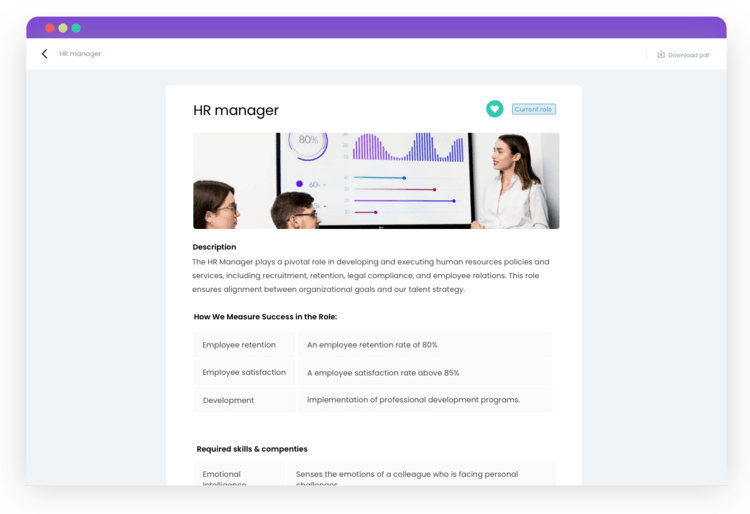
With Learned, you make expectations and evaluations transparent. Using AI, you can easily create market-conform job profiles with objectives, competencies and skills. Try Learned free for 14 days and discover all job profiles within Learned yourself.
Explanation: In this example, you see the job profile for an HR manager. This profile and over 4,000 other profiles are freely available in Learned. You can see how the success of this role can be measured and which behaviors are required for which competencies and skills.
Ontvang de nieuwste HR-tips
Krijg 1 keer per maand onze tips, e-guides en templates direct in je mail.