

The modern annual review promotes growth, engagement and performance improvement, far from an annual formality. In this blog we delve deeper into the value of the modern annual review and how it can contribute to the success of your organization. Want to get started right away? Download our free annual review template and get started!
Meaning of the modern annual review
The modern annual review marks a shift from the traditional, one-sided evaluation to a more interactive and engaged approach to performance reviews. In this modern approach, open communication is central, with managers and employees collaborating to set goals, discuss performance, and identify development opportunities.
The modern annual review integrates 360-degree feedback and a continuous dialogue throughout the year, promoting growth, feedback, and engagement, making it not just an annual obligation but a valuable instrument for professional development and performance improvement.
The modern annual review as a strategic tool
This conversation is not only an opportunity to evaluate your employees' performance; it is a strategic tool that can help your organization in several ways:
- Performance management: The annual review enables you to evaluate and assess your employees' performance. This helps identify strengths and areas for improvement, which is essential for effective performance management.
- Employee development: The annual review offers an opportunity to discuss employee development needs. By discussing how they can improve their skills and competencies, you contribute to their growth and development.
- Goals and strategy: During the annual review, you can set clear goals for the coming year. This ensures alignment between individual employee goals and the strategic goals of your organization.
- Talent management: The annual review provides insight into the strengths and potential of your employees. This helps with talent management decisions, such as promotions, training and succession planning.
- Employee engagement: When employees feel heard and valued during the annual review, their engagement with work and the organization increases. Engaged employees are often more productive and stay longer at your company.
Example of a modern annual review
In a modern approach to annual reviews, the focus shifts from a one-sided evaluation to a more interactive and development-oriented dialogue between managers and employees. Let's take a look at an example of what such a modern annual review could look like with examples:
The Beginning of the Conversation
In this first phase of the conversation, the tone is set with a friendly and open greeting. It is important that both parties feel comfortable to speak freely.
Example questions:
- How do you feel about your work and the past period? Is there anything specific you would like to discuss?
- What are your expectations for this conversation and what do you hope to achieve?
- Is there anything from the past year that you would like to pay extra attention to?
Reviewing Performance
In this part of the conversation, the employee is encouraged to reflect on their performance over the past year. They can also share some specific successes.
Example questions:
- Which projects or achievements from the past year are you most proud of and why?
- Can you name some challenges or obstacles you overcame and how did you do that?
- Are there specific feedback or recognition from colleagues or clients that stood out to you and that you would like to share?
Development Needs and Goals
Here attention shifts to the future and the employee is invited to think about development needs and goals.
Example questions:
- In which areas do you see opportunities for personal and professional growth?
- Are there specific skills, competencies, or knowledge areas that can help you in your role?
- How do you think you can further develop yourself to contribute to team or organizational success?
Action Plans and Support
At this stage, the manager is actively involved in helping the employee create concrete action plans and offers support and resources.
Example questions:
- What steps do you think you can take to achieve your development goals, and what support do you need?
- Are there training programs, courses, or mentoring opportunities you have in mind to help with your growth?
- How can we collaborate to identify and overcome any obstacles while you work on your development?
Closing and Looking Ahead
The conversation concludes on a positive note with a shared sense of commitment to the employee's growth and development. This example illustrates how modern annual reviews focus on a constructive and forward-looking approach, with the employee's development at the center.
Example questions:
- Is there anything else you would like to share or discuss before we conclude our conversation?
- Are there clear action points or agreements we established during this conversation that you would like us to summarize?
- What are your thoughts on how we can continue to work together in the future to achieve your development goals and support you in your role?
Is the annual review mandatory?
Legally, it is not mandatory to conduct an annual review between employee and employer. In many cases, however, it is a standard practice within organizations to hold annual appraisal or development conversations. These conversations provide a structured opportunity for managers and employees to discuss performance, set goals and plan for the future. They contribute to improving communication and engaging employees in their own growth.
Although annual reviews are often considered valuable, it is important to note that their nature and frequency can vary. Some organizations conduct formal annual appraisal conversations, while others prefer informal, frequent check-ins. It depends on the company culture and the specific needs of the organization. In some cases, government regulations or union agreements may also impose requirements on annual reviews. In general, however, annual reviews, in whatever form, can be a valuable tool for improving performance and supporting employee development.
How to transform your annual reviews into development opportunities with Learned
With Learned you can effortlessly prepare and organize annual reviews using our specially designed templates, including various topics and themes aimed at development. By using modern annual reviews. Through the integration of 360° feedback into the conversation, you get a concrete picture of the performance, competencies and potential of your employees from various perspectives. Learn how to use annual reviews as a starting point for development with Learned!
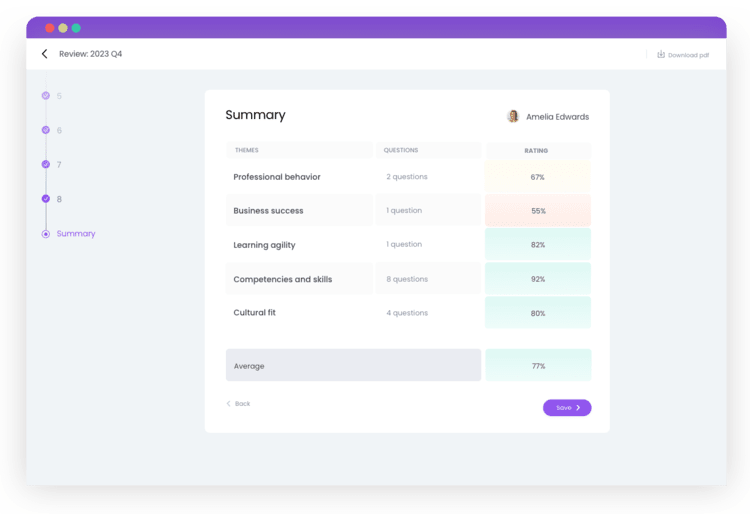
Learned facilitates objective evaluations. By creating multiple measurement moments per year based on different themes – for example: the fit with your culture and the achievement of goals, you gain objective insight into your low and high performers.
Image caption: In each evaluation it becomes clear how the employee scores on the different themes
Ontvang de nieuwste HR-tips
Krijg 1 keer per maand onze tips, e-guides en templates direct in je mail.

Related articles
Discover more about this topic