

💡 Want to get started right away? Download our template for conducting modern evaluation meetings
What Is a Progress Review?
A progress review is a structured, regularly scheduled conversation between a manager and an employee to discuss performance, goals, development, and expectations. The goal is to promote an open and constructive dialogue that contributes to the employee's growth and development and supports organizational goals. Here are some key characteristics of a progress review:
- Regularity: Progress reviews should take place periodically, usually annually, semi-annually, or quarterly, depending on the organization and employee needs.
- Goal-oriented: The conversation has clear objectives, such as evaluating performance, setting goals, identifying development needs, and discussing career path options.
- Two-way communication: The conversation should be a two-way street, where both the manager and employee have the opportunity to share their perspectives and feedback.
Why Are Progress Reviews Important?
Progress reviews contribute to several important aspects of personnel management and organizational development:
- Performance improvement: By evaluating performance and setting goals, employees can be encouraged to improve and grow in their roles.
- Motivation: Encouraging open dialogue and recognizing achievements can increase employee motivation.
- Development: These conversations provide opportunities to identify development needs, such as training or coaching.
- Talent management: Setting long-term goals and discussing career opportunities helps retain talented employees and develop leaders.
Best Practices for Progress Reviews
- Preparation: Both the manager and employee should prepare for the conversation. The manager should evaluate performance and gather relevant documentation.
- Positive and constructive tone: Start the conversation on a positive note and emphasize the importance of collaboration and growth.
- Set SMART goals: Set specific, measurable, achievable, relevant, and time-bound (SMART) goals.
- Give and receive feedback: Provide specific, constructive feedback using examples.
- Development plans: Identify development needs and discuss organizational support.
- Documentation: Keep documented records of the conversation including goals and action points.
- Follow-up: Schedule follow-up meetings to discuss progress.
- Confidentiality: Respect the confidentiality of the conversations.
Example Questions for a Progress Review
Are you getting started with implementing or renewing your progress conversations or evaluation conversations? This template with best practices, conversation topics and over 25 example questions can help you.
Download our free template for modern evaluation conversations here 👉

Conducting Progress Reviews with Learned
Want to start conducting progress reviews but not sure exactly how to prepare? With the Learned platform, you can get started right away with progress review templates. These have already been used by more than 200 organizations multiple times to conduct thousands of progress reviews!
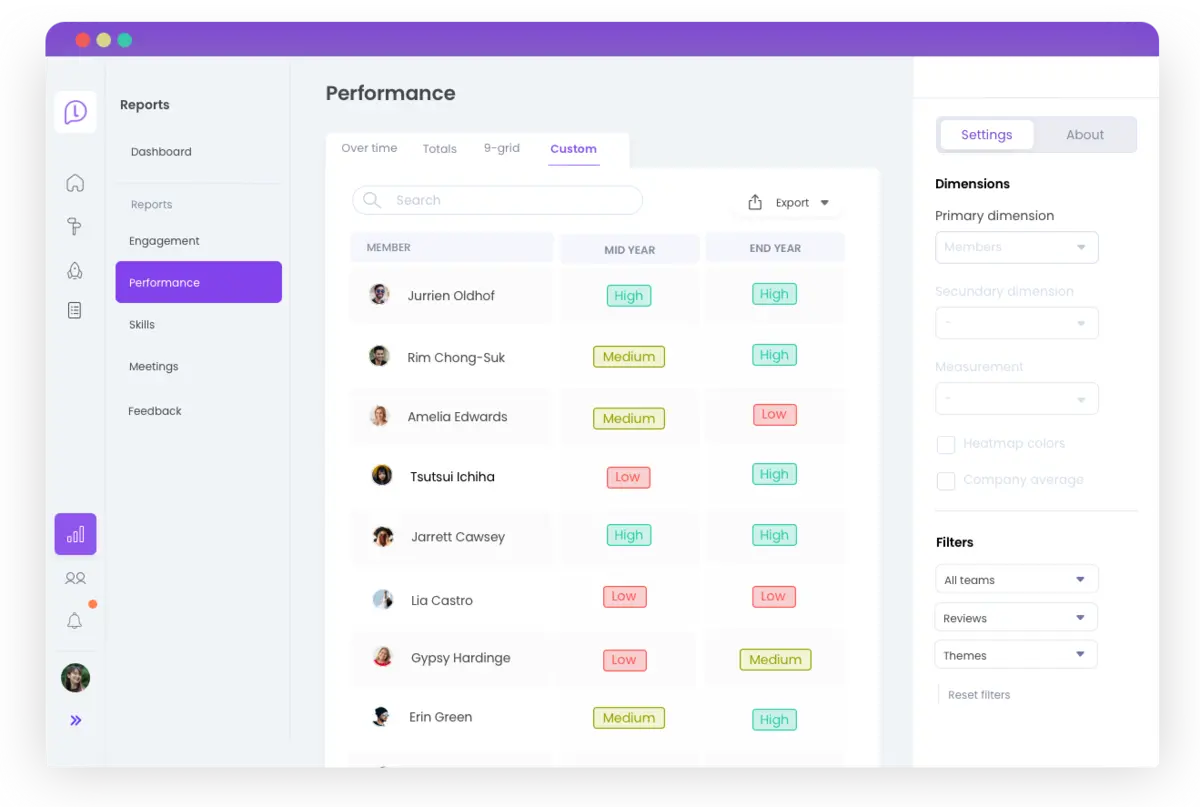
With Learned, you get real-time insight into your low and high performers. In the performance report, you can see at a glance how employee performance develops over time. Use these insights to take action for low performers and show appreciation for high performers. Try Learned free for 14 days!
Ontvang de nieuwste HR-tips
Krijg 1 keer per maand onze tips, e-guides en templates direct in je mail.

Related articles
Discover more about this topic