

What is Quiet Quitting?
Quiet Quitting is a term used to describe a situation where employees become demotivated and lose engagement at work, but choose not to formally resign. They may perform their tasks, but their dedication, enthusiasm, and willingness to go the extra mile are significantly reduced.
Why is Quiet Quitting a Concern?
Quiet Quitting can be just as damaging as high turnover for several reasons:
- Decreased productivity: demotivated employees are less productive, leading to a decline in overall organizational performance.
- Negative impact on morale: Quiet Quitters can have a demoralizing effect on their colleagues, potentially leading to a toxic corporate culture.
- Loss of innovation: when employees disengage, they are less inclined to contribute new ideas or innovations to the organization.
- Increased risk of turnover: over time, Quiet Quitters may decide to leave the company, resulting in the loss of experienced talent.
- Replacement costs: replacing employees, even those who have quietly left, can be costly in terms of recruitment, onboarding, and training.
Tips to Recognize Quiet Quitting
Recognizing Quiet Quitters can be challenging because they may not show clear signs of dissatisfaction. However, some common indicators include:
- Reduced participation in meetings and team activities.
- Decreased enthusiasm or motivation.
- A decline in work quality.
- Increased absenteeism or tardiness.
- Disinterest in career development opportunities.
To effectively address Quiet Quitting, HR professionals and organizations can take several steps:
- Regular conversations: encourage managers to regularly hold one-on-one meetings with team members to gauge their satisfaction and any concerns.
- Feedback and recognition: provide ongoing feedback and recognition for good work. Recognizing employee efforts can increase their engagement.
- Professional development: offer opportunities for skill development and career growth. Employees are more likely to be engaged when they see a future in the company.
- Wellness programs: implement well-being programs that promote physical and mental wellness. A healthy workforce is more likely to be engaged.
- Employee surveys: conduct surveys to gather workplace satisfaction feedback and identify areas that need improvement.
- Open communication: encourage open and honest communication throughout the organization, so employees feel comfortable voicing their concerns.
Learned: The Perfect Platform to Address Quiet Quitting
Learned offers tools for tracking engagement, collecting feedback, and identifying trends that may indicate Quiet Quitting. By using Learned, HR teams can proactively respond to the needs of their employees, improve communication, and increase engagement and satisfaction in the workplace. This contributes to creating a positive work environment where employees feel valued and heard, minimizing the chance of Quiet Quitting.
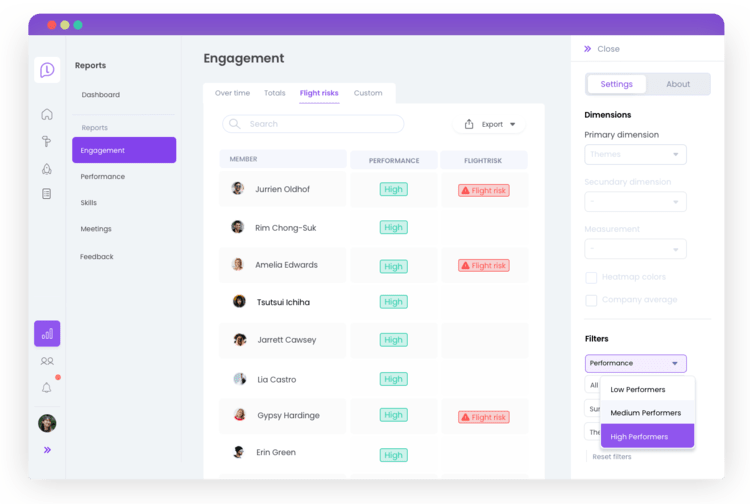
With the Learned platform, you get the insights you really need. Namely, which high performer you should engage with to keep them committed to your organization. Try Learned free for 14 days!
Image explanation: The Learned platform combines data from the platform to predict which of your high performers have an increased chance of leaving.
Ontvang de nieuwste HR-tips
Krijg 1 keer per maand onze tips, e-guides en templates direct in je mail.