The IMF states that in advanced economies, about 60% of jobs are affected by AI transformation. McKinsey expects that by 2030, generative AI could automate activities accounting for up to 30% of current hours worked.
That doesn't necessarily mean less work. But it does mean different work.
And that's precisely the problem for many organizations.
The structure lags behind reality
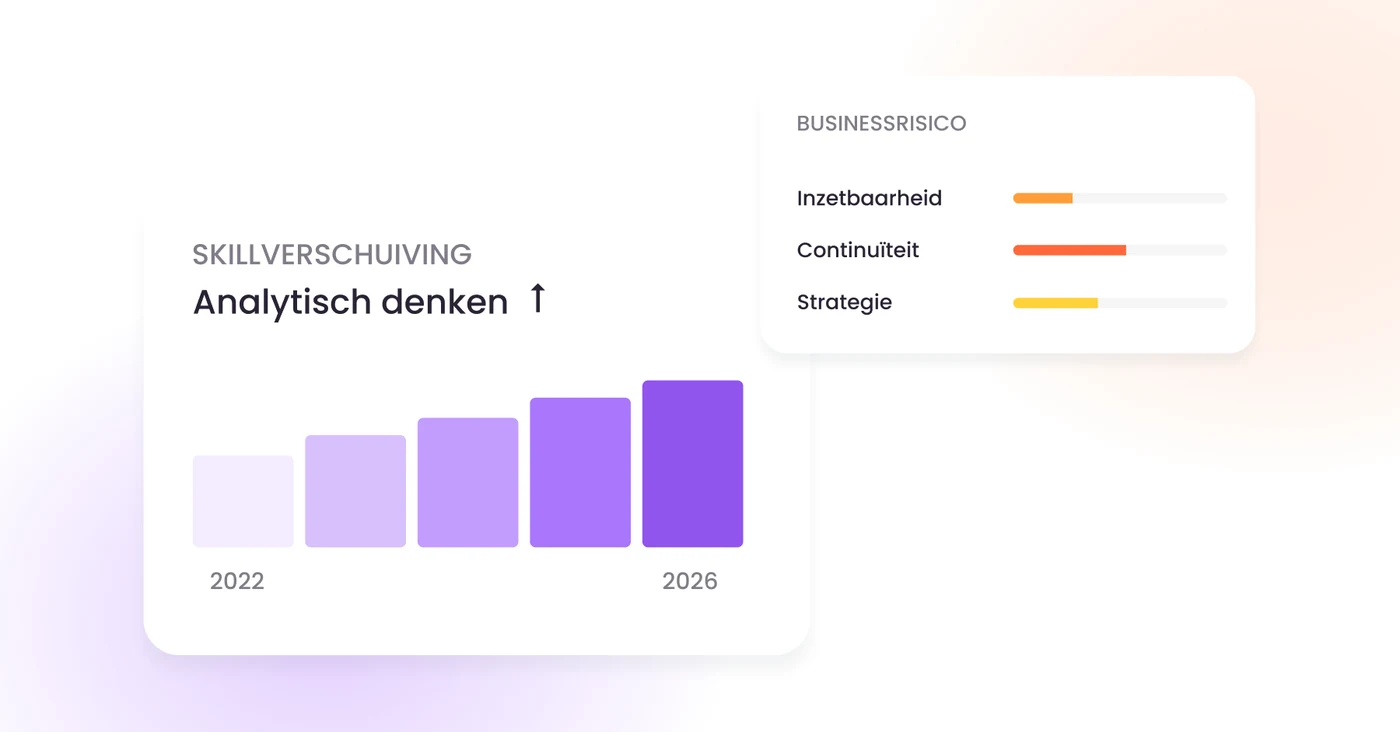
Roles change faster than job profiles can keep up. People have been doing work for months that isn't in their job description. Teams rely on one or two colleagues for critical work. And development plans are still based on a reality that is already shifting.
That's not an HR problem. That's a business risk.
Because if skill shifts become visible too late, it directly impacts the feasibility of your strategy. Roles become vaguer. Teams more vulnerable. And talent leaves for organizations that do offer perspective.
How to keep up with changes
The good news: you don't need to launch a large-scale transformation program. Organizations that remain agile start small, by making visible where work is already shifting and steering deliberately in that direction. This begins with an overview: which tasks are changing, which skills are becoming more important, and where is the greatest business risk?
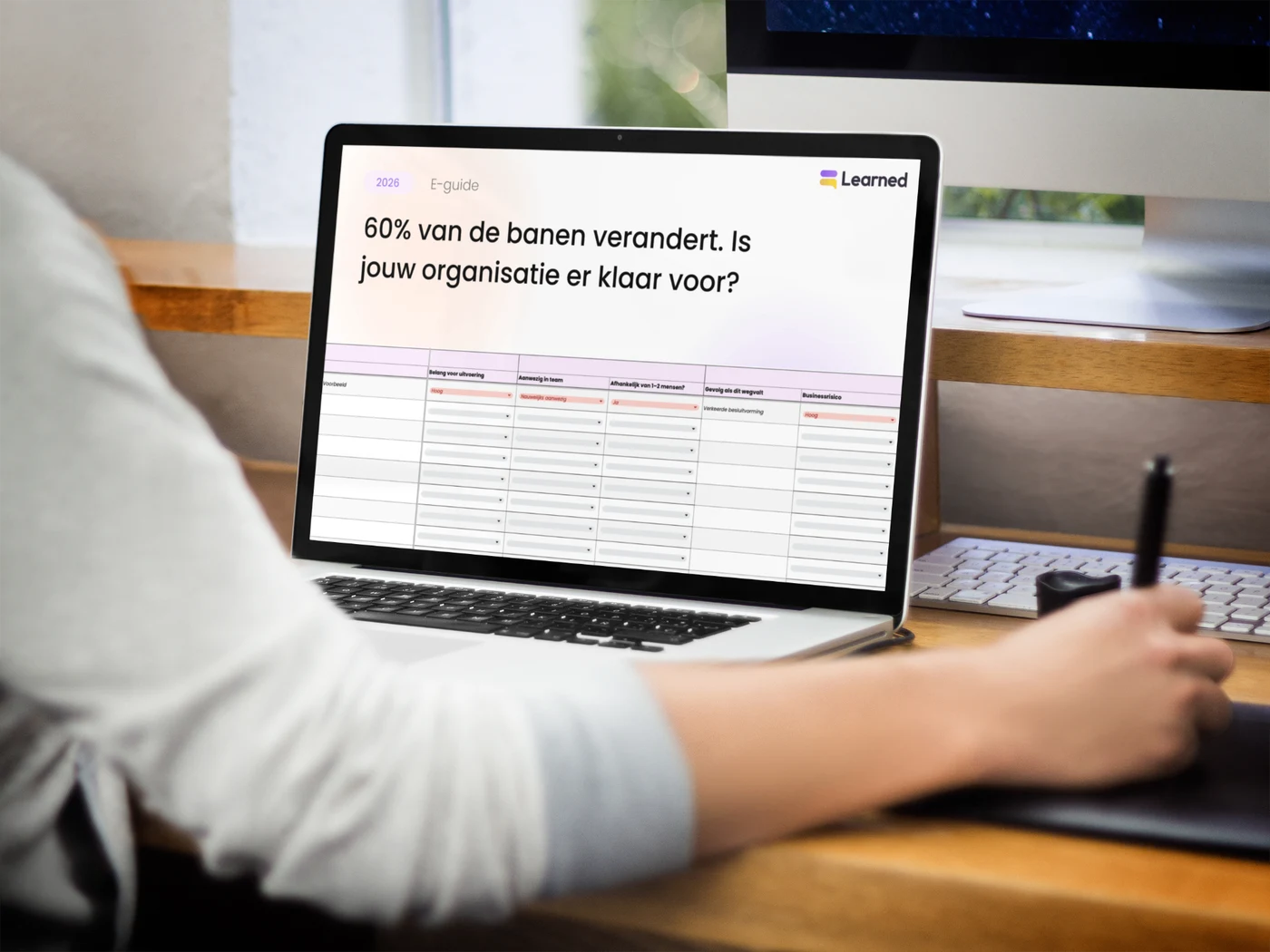
In our guide, we show you step-by-step how to tackle this. Included is a practical spreadsheet that allows you to map out which work is changing and what the associated business risk is for each role or team.
What steps do you take?
With the insights from the spreadsheet, you can then take targeted action. This step-by-step plan helps you move from insight to execution:
- Determine where the business risk is greatest. Identify the roles and teams where changes most strongly impact continuity, strategy, and feasibility.
- Choose which skills and roles have priority. Not everything can be done at once. Make clear choices about where you invest first.
- Translate this into development and deployability. Link the priorities to concrete development plans, training, or role redesign.
- Update profiles and career paths. Ensure that job profiles and growth paths within your job framework move with the new reality, so they continue to provide direction.
Organizations that clearly understand where work is changing today will be agile tomorrow. The rest will lag behind.
Structural control over changing work
Do you want to work on this structurally? Learned helps organizations to make skill shifts visible and to translate them into better choices regarding development, role design and continuity. For example, by using tools such as the 9-grid to get a better insight into talent and potential.
Ontvang de nieuwste HR-tips
Krijg 1 keer per maand onze tips, e-guides en templates direct in je mail.

Related articles
Discover more about this topic