

A bilateral meeting (BILA) within a company is direct communication between an employee and manager to exchange information, discuss performance and set goals. It promotes openness, feedback and collaboration. Alternative terms include two-way meeting, personal meeting or 1-on-1 meeting. Best practices include preparation, regular planning, open communication, goal orientation, listening and giving feedback, documentation and follow-up.
👉 Get started right away? Download our free template for a successful 1-on-1 meeting
What is a BILA meeting?
A bilateral meeting within a company is direct communication between an employee and their manager. It provides an opportunity for the employee and manager to exchange information, discuss performance and set goals together. During this meeting, work-related matters can be discussed, such as project progress, performance assessment, career goals and any concerns or challenges. The aim of this meeting is to promote openness and understanding, give and receive feedback, and strengthen collaboration. It offers the employee and manager an opportunity to align, adjust goals and work together towards success within the organisation.
What are other names and examples of BILAs?
In practice, different organisations often use different names and abbreviations for this type of meeting. The specific term used can vary depending on the industry or context in which the meeting takes place. Here are some examples we often see:
- Two-way meeting
- Direct meeting
- Personal meeting
- One-on-one meeting
- 1-1 meeting
- Check-in
- Individual meeting
- Bilateral meeting
Tips for conducting a BILA meeting
Organising these meetings naturally takes considerable time. That's why we'd like to give you a checklist for successfully conducting BILAs.
1. Preparation
Both the employee and manager should prepare well before the meeting. Make a list of the key points, goals or concerns to be discussed, so the meeting can proceed in a focused and productive manner.
2. Regular scheduling
Schedule regular recurring BILAs, for example monthly or quarterly, to ensure continuity and communication. Make sure both parties are aware of the scheduled dates and times and set reminders if necessary.
3. Open communication
Ensure there is an atmosphere of openness and trust during the meeting. Encourage both parties to freely share their thoughts, concerns, successes and challenges. This promotes a constructive dialogue and helps identify possible solutions.
4. Goal orientation
Keep the focus during the meeting on the set goals. Identify concrete action points together and make agreements to achieve them. Set realistic goals that are measurable and achievable, and evaluate progress during future BILAs.
5. Listening and giving feedback
Ensure both parties actively listen to each other and give genuine feedback. This helps in understanding each other's perspectives and finding common ground. Constructive feedback can lead to growth and development for the employee.
6. Documentation
Keep minutes or notes of each BILA meeting. This can help track important points, agreements and goals. Documentation provides a reference point for future discussions and serves as a reminder of the agreements made.
7. Follow-up
After the meeting, it's important to follow up on any next steps. Hold each other accountable for actions taken and evaluate progress during future BILAs. It is also useful to discuss any changes or updates that may affect previously made agreements.
How do you prepare for a BILA meeting?
Good preparation is important. But how do you best approach it? Here are some handy tips.
1. Define goals and topics
Clearly define the goals and topics you want to discuss during the meeting. Think about what you want to achieve and what specific issues you want to discuss, such as project progress, performance, development needs or other relevant matters.
2. Gather relevant information
Gather all necessary information needed for the meeting. This may include reports, statistics, project updates, colleague feedback or other relevant documents. Make sure you understand the information well and have it ready for the meeting.
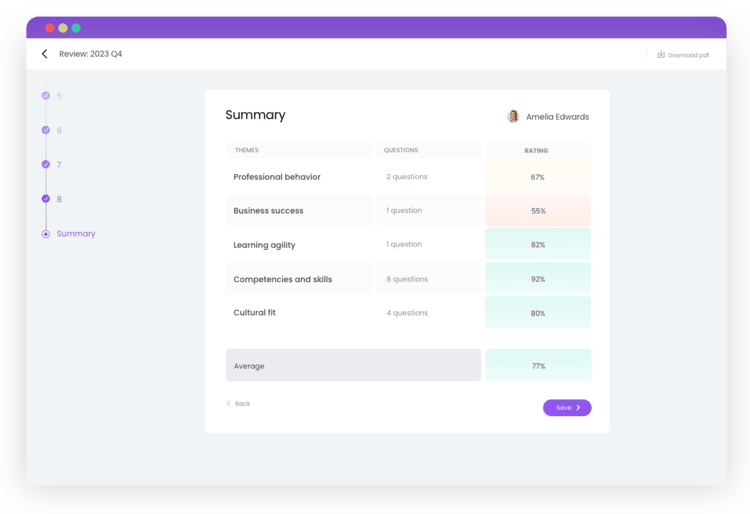
Learned facilitates objective evaluations. By creating multiple measurement moments per year based on different themes – for example: cultural fit and goal achievement, you gain objective insight into your low and high performers. Try Learned free for 14 days and conduct BILAs that align with your employees' performance.
Note: In each evaluation, it becomes clear how the employee scores on the different themes.
3. Organise your thoughts
Take time to organise your thoughts and make notes about the key points you want to discuss. This allows you to formulate your thoughts clearly and prevents you from forgetting important matters during the meeting.
4. Anticipate questions and reactions
Try to imagine what questions, concerns or reactions your manager might have. Prepare for possible scenarios and think about how best to respond. This helps you enter the meeting confidently and well prepared.
5. Set specific goals and action points
Formulate specific goals you want to achieve during the meeting. These could include solving a problem, setting development goals or discussing new projects. Also determine possible action points that need to be taken after the meeting.
6. Plan the timing and duration
Coordinate the timing and duration of the meeting with your manager. Ensure there is enough time to discuss all important topics without being rushed. Respect each other's schedules and ensure a suitable environment for the meeting.
7. Document relevant information
If there are specific documents, reports or other information you want to share during the meeting, make sure they are organised and easily accessible. Consider making a summary or overview of the key points to share.
By following these steps, you can prepare well for a bilateral meeting and ensure you achieve the desired results. Good preparation helps you enter the meeting confidently and focused and promote effective communication with your manager.
Conduct effective recurring BILAs with Learned
With the Learned platform, you can schedule a recurring BILA in just a few clicks. We give this capability to both the manager and the employee. Set up a list of conversation topics, keep meeting notes and add your next steps after each conversation. With our powerful calendar integrations, you can be sure all your meetings are neatly synchronised with your calendar.
Want to try Learned free for 14 days? Create a free trial account now.
Ontvang de nieuwste HR-tips
Krijg 1 keer per maand onze tips, e-guides en templates direct in je mail.

Related articles
Discover more about this topic