

How to Make Strengths Even Stronger?
In performance conversations, the manager highlights the tasks that employees excel at. They have gathered information from direct stakeholders, such as a project leader, client, colleagues, etc., asking them: 'what strengths does this employee owe their good performance to?' In the conversation, the manager expresses appreciation and explains what they have heard. Subsequently, they explore with the employee how these strengths can be further reinforced and deployed. The manager has explored in their preparation which roles and projects this applies to. This preparation allows concrete action to be taken during the conversation.
Feedask
The employee has also prepared for the conversation by asking about compliments received during the past period – feedask. With feedask, the employee collects information from others about their performance, and when it's a compliment, they ask follow-up questions. Compliments are often dismissed with phrases like: 'oh, it wasn't that difficult' or 'well, I'm just muddling along'. While a compliment contains a goldmine of information about a strength.
Tip: as an employee, when receiving a compliment, ask questions like: 'why did you think it was good?', 'What did you appreciate about my approach or attitude?' and 'what made you enthusiastic?' The answers clarify where the employee is truly effective and what their strengths are.
Feedforward
When employees develop, not everything goes right immediately. Mistakes are therefore learning moments and thus valuable. But mistakes that have been made cannot be undone. Employees often know where things went wrong, so they don't need to hear it again. Why not focus on the future instead? The future can be changed, the past cannot. Feedforward is feedback but in a forward direction. It is future-oriented, positive, and focuses on how someone can change their behavior in the future.
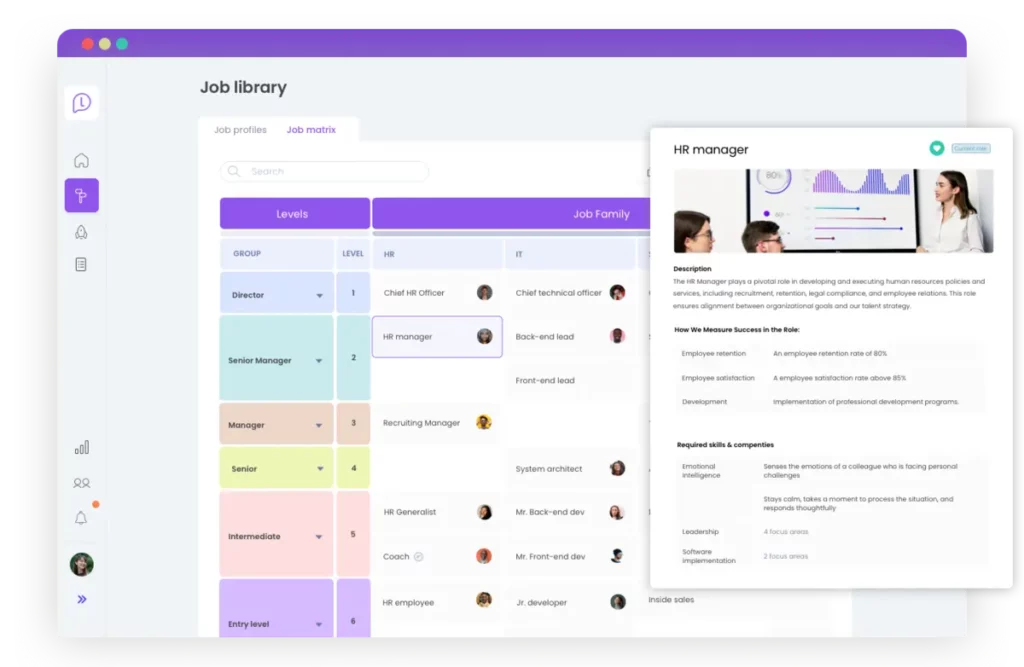
With Learned, you can easily generate a modern job framework. This makes evaluations objective and transparent. Try Learned free for 14 days!
Want to Learn More About Feedforward and Feedask?
Curious about which questions you can ask in the performance review? Also read our blog '10 important questions for a constructive and modern performance review'.
Ontvang de nieuwste HR-tips
Krijg 1 keer per maand onze tips, e-guides en templates direct in je mail.