

In this blog, we take a deeper look at the essential role of an HR manager within an organization. As the person responsible for all human resources processes, the HR manager plays a crucial role in attracting, developing and retaining talented employees. From recruitment and selection to policy development and talent management, discover how this key figure contributes to a positive work culture and improves workforce effectiveness. In this blog, we also discuss how the HR manager relates to other HR functions and when it's time to hire someone for this position to ensure successful HR management. Read on and discover more about the valuable role of an HR manager in modern organizations.
Take your HR cycle to the next level! With our free e-guide, you can design a modern HR cycle yourself. Download it here and get started right away!
What is an HR Manager?
An HR manager is responsible for all human resources processes within an organization. They handle recruitment, training, performance management and labor relations. They also develop policies and ensure a positive work culture and employee well-being. HR managers work together with employees and managers to understand staffing needs and develop strategies that improve productivity and effectiveness. By promoting talent development and meeting legal requirements, they contribute to the long-term success of the organization.
What Are the Tasks and Responsibilities of the HR Manager?
It should be clear that an HR manager is involved in numerous processes. To give you an even better picture, we have listed the most important ones. It is important to mention that the nature and size of the organization does impact which of these processes apply.
1. Recruitment and Selection
Coordinating the recruitment process, posting vacancies, screening CVs, conducting job interviews and selecting suitable candidates for positions.
2. Personnel Management
Managing employee files, contracts, payroll administration, and ensuring compliance with labor laws and regulations.
3. Training and Development
Identifying training needs, organizing training sessions and promoting the professional development of employees.
4. Performance Management
Setting up and conducting performance reviews and guiding employees in their career development.
5. Labor Relations
Promoting a positive work culture, resolving labor disputes and facilitating communication between employees and management.
6. Policy Development
Developing and implementing HR policies and procedures that meet the needs of the organization and applicable laws and regulations.
7. Employee Well-being
Supporting employee well-being, including offering health and wellness programs.
8. Talent Management
Identifying and retaining talented employees, and promoting their career development.
9. Compliance
Ensuring compliance with labor laws, regulations and policies to minimize legal risks.
10. Strategic Planning
Advising senior management on HR-related issues and contributing to the overall business strategy.
11. Diversity and Inclusion
Promoting an inclusive work environment and implementing initiatives to promote diversity.
How Does the HR Manager Relate to Other HR Functions?
The HR manager is a leader within the HR team, which encompasses a variety of HR functions. In addition to the HR manager, the team includes:
- HR assistant: Supports administrative tasks such as managing employee files, payroll and recruitment activities.
- Recruiter: Responsible for recruiting and selecting new talent, including drafting vacancies and conducting job interviews.
- Learning and development specialist: Identifies training needs, develops training programs and facilitates the professional development of employees.
- HR advisor: Provides employees and managers with advice and guidance on HR issues, performance management and labor relations.
- Employee satisfaction expert: Focuses on promoting a positive work culture, resolving conflicts and facilitating communication between employees and management.
- HR Business Partner: Works closely with specific departments or teams within the organization and acts as a strategic partner to develop customized HR initiatives and policies.
When Does Your Organization Need an HR Manager?
The most important reason for an organization to hire an HR manager is when the size of the workforce and the complexity of HR-related tasks and responsibilities increase. As an organization grows, more HR challenges arise, such as recruitment, talent development, labor relations, performance management and compliance with labor laws.
An HR manager is able to carry out strategic HR planning, develop policies and procedures, and lead the HR team in supporting the entire organization. They can also play a crucial role in promoting a positive work culture, retaining talent and implementing employee well-being initiatives.
In short, hiring an HR manager is necessary when the organization needs an experienced professional who can address the complexity of HR-related matters and contribute to successfully managing and developing the workforce within the organization.
We just concluded that the HR manager is involved in numerous processes. This also includes many administrative tasks that you can easily digitize with Learned. This saves you valuable time to spend on strategic HR initiatives.
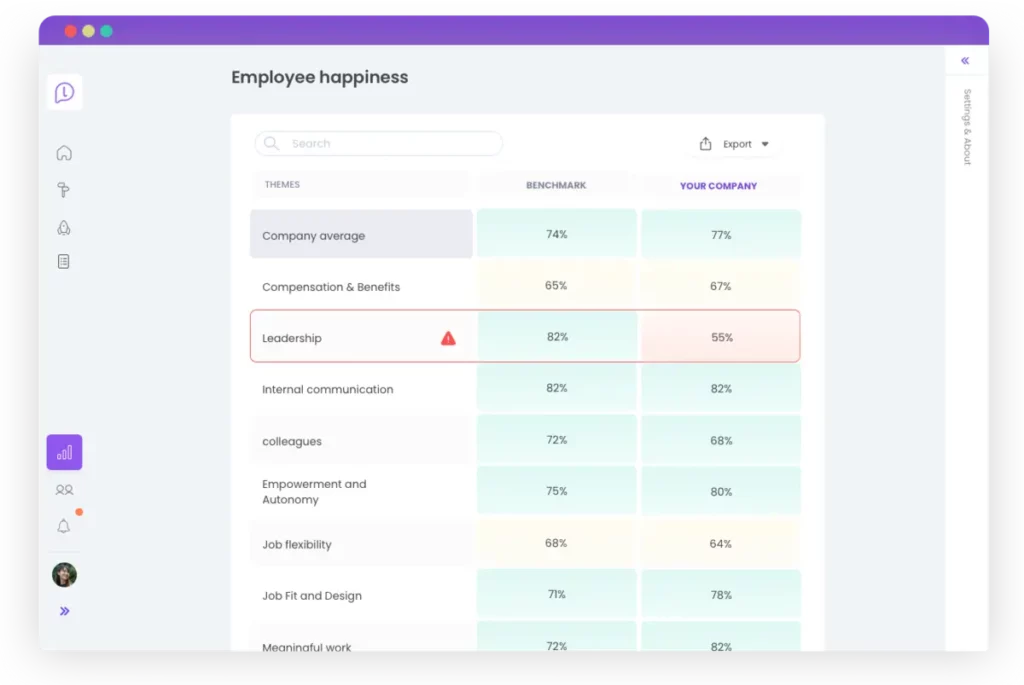
Learned helps you interpret the results of your employee satisfaction surveys and set priorities for improving engagement by giving you insight into your score compared to similar organizations (Benchmarking). Try Learned free for 14 days and experience how much time you can save!
In this example, you can see that for this organization the theme "Leadership" scores low and the benchmark is much higher. Clearly something to improve. On the other hand, you can also see that the theme "compensation" scores relatively low. However, the benchmark is also lower. Therefore, less priority needs to be given to this.
Ontvang de nieuwste HR-tips
Krijg 1 keer per maand onze tips, e-guides en templates direct in je mail.