

Core values are the invisible building blocks of a company. They shape the culture, guide decisions, and influence how colleagues interact with each other. In the world of human resources (HR), core values play a crucial role in shaping personnel policy, attracting talent, and creating a positive work environment. In this blog, we dive deeper into why core values are so important for a company and how they contribute to its success.
💡 Ready to start with core values in your evaluation process? Make them a standard part of the job profile
What are core values?
Core values are the fundamental beliefs and principles that guide the behavior and decisions of an organization and its employees. They serve as guidelines for what is and is not acceptable within the company culture. While mission and vision statements often describe strategic goals, core values reflect the ethics and standards an organization strives for.
Why core values are essential
- Recruitment and selection: Core values are essential in attracting talent that fits your organization. It facilitates integration into the company culture and reduces conflict risk.
- Culture formation: They serve as guidelines for desired behavior and form the foundation of the company culture that is created and maintained.
- Performance management: They also help evaluate your performance and that of your colleagues. They provide a framework to assess whether you pursue organizational values in your daily work.
- Ethics and integrity: Core values serve as a compass that helps you and your colleagues make ethical decisions and act with integrity when dealing with sensitive HR matters.
- Leadership and development: They play a crucial role in developing leadership capabilities within your organization. Leaders must embody them and integrate them into their management style.
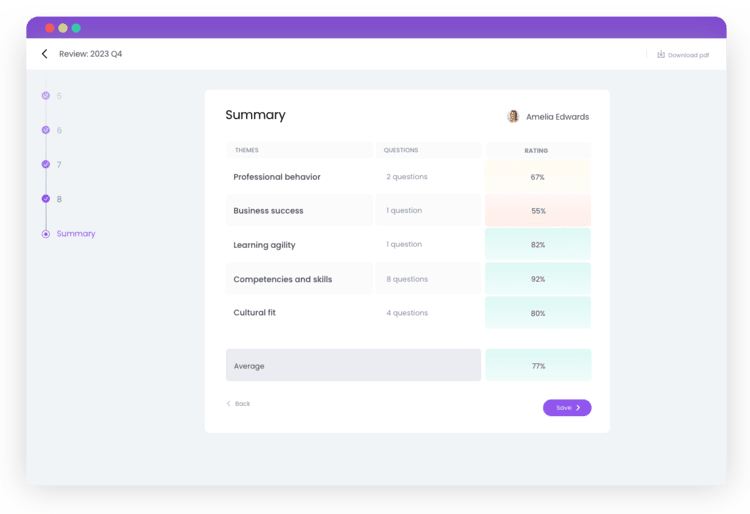
Learned facilitates objective evaluations. By creating multiple measurement moments per year based on different themes – such as cultural fit and goal achievement, you gain objective insight into your low and high performers. Try Learned free for 14 days!
Caption: In each evaluation it becomes clear how the employee scores on the different themes.
How do you determine your organization's core values?
Defining core values requires a careful process:
1. Involve employees: It is important to involve employees in determining core values. Organize workshops or surveys to collect input from employees.
2. Analyze the organizational culture: Look at the existing culture and identify values already being practiced. This can help formulate core values that fit your organization.
3. Define and articulate: Formulate core values in a clear and concise manner. They should be easy to understand and remember.
4. Implement and communicate: Integrate core values into all processes, from recruitment to performance reviews. Actively communicate them to employees and ensure they are known throughout the organization.
5. Integrity and consistency: It is crucial that your organization and its leaders consistently uphold core values. Integrity in maintaining values is essential for credibility.
Examples of core values
1. Integrity
Integrity is often a guiding core value. It emphasizes honesty, trust, and ethical behavior when dealing with employees, customers, and sensitive data.
2. Empathy
Companies often emphasize empathy as a core value. It shows commitment to the well-being of employees and customers and stimulates understanding of their needs and concerns.
3. Professionalism
Professionalism is an important core value because it promotes high standards for behavior and performance. It encourages acting with expertise and respect.
4. Diversity and inclusion
Diversity and inclusion are increasingly important core values. They emphasize striving for a diverse and inclusive work environment and equal opportunities for all employees.
5. Learning and development
Many companies emphasize core values focused on learning and development. This encourages continuous growth and improvement, both for employees and the organization as a whole.
6. Customer focus
This core value is crucial. It emphasizes understanding and meeting the needs of customers, whether they are employees or organizations.
7. Confidentiality
As certain employees have access to sensitive information, confidentiality is an essential core value. It emphasizes the importance of handling personal and company data discreetly.
8. Collaboration
Collaboration and teamwork are also commonly seen. They encourage colleagues to work together effectively and contribute to the success of the organization.
Make core values part of your job architecture with Learned
The most important tip from this blog? Make core values one of the areas on which you evaluate employee performance.
Of course it is important that team members achieve their goals and show development in their soft skills and other competencies. But whether their behavior in the workplace meets the core values that matter in your organization is equally important.
Therefore, make sure to include core values as part of a job profile.
👉 Want to know more? Download our e-guide 'Creating job profiles with and without AI'
Ontvang de nieuwste HR-tips
Krijg 1 keer per maand onze tips, e-guides en templates direct in je mail.

Related articles
Discover more about this topic