

An annual performance review is a fixed part of many organizations. But let's be honest, they often feel more like a mandatory routine than a valuable exchange between employer and employee. Most HR managers and employees believe that traditional annual reviews contribute little to clear, fair, or inspiring feedback. Research by Gallup (2024) shows that only 2% of HR leaders believe their performance management system effectively motivates employees to improve. Moreover, only 22% of employees say the review process is fair and transparent (Gallup, 2024).
While these conversations are intended as a means for growth and performance improvement, they often turn out to be a source of frustration and misunderstandings. Let's zoom in on this problem and expose the pain points that many organizations and employees experience.
Pain points of the performance review
Both employees and HR/management experience various pain points when conducting performance reviews. As a result, many companies do not see the value of performance reviews and even want to abolish them entirely. We have listed all the pain points experienced by employees and HR/management below.
From the employee perspective
- The performance review is seen as a "must-do".
- Employees experience a decline in engagement, partly influenced by a lack of trust in the fairness and transparency of performance reviews. This dissatisfaction can have a negative impact on motivation and productivity (Gallup, 2024).
- 1 in 5 employees experiences the performance review as transparent, fair, or motivating to perform better (Gallup 2024).
- Performance reviews often pay insufficient attention to employees' talents and skills, meaning the conversation does not align well with their strengths and development needs (OECD, 2024).
- Finally, no less than 66% of employees indicate that an annual review cycle lowers their productivity.
From the HR/management perspective
- 90% of HR managers say annual performance reviews do not contain qualitative information
- 95% of managers are dissatisfied with an annual performance management process
- 66% of employees say an annual performance management process lowers their productivity
- The average manager spends about 210 hours per year on performance reviews
Want to get started tackling these pain points right away? This template provides a guide for both the manager and the employee and ensures all relevant topics are covered. We have developed a comprehensive template, including example questions. Download the performance review template for free!
Cause of the problems surrounding the performance review
All bad experiences with performance reviews have of course originated somewhere. The cause of the above problems comes down to the following 3 points:
- Due to unclear expectations, evaluations are based on the manager's gut feeling, and it is unclear what the employee can develop.
- Evaluations do not take place or happen irregularly, making them a snapshot. This lacks recognition and says little about a full year's performance.
- The scores given in evaluations differ per manager, are not calibrated (sales manager scores higher), and are therefore unfair.
As a result, underperforming employees go unnoticed and high-performing employees leave due to a lack of appreciation. With high costs as a consequence.
How do you gain valuable insights?
By making evaluations objective, you ensure that the full potential of talent is utilized and you retain talent. To achieve this, a number of components are essential:
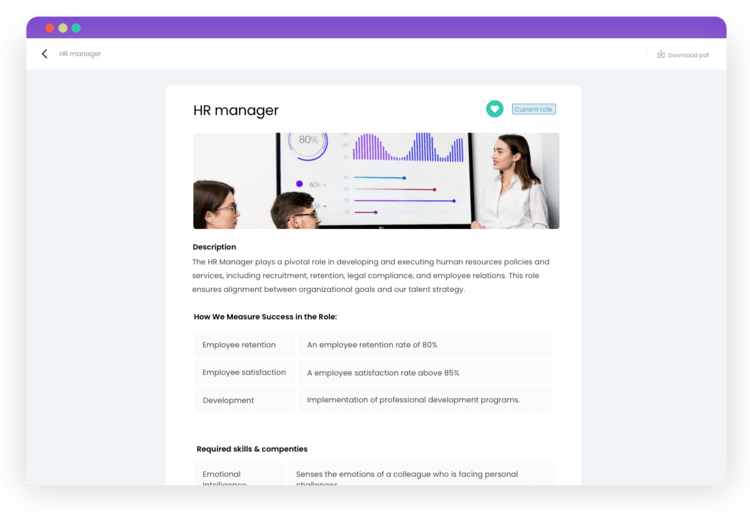
1. Clarify expectations using the job profile
By conducting evaluations based on the job profile of employees, you create clear expectations for both employee and manager. The job profile lists the expected skills and competencies that belong to the role, including behavioral examples. This way, the employee always knows concretely what is expected of them. Job profiles form the basis for performance reviews and salary policy. They establish objective standards to measure how well an employee performs based on job requirements.
2. Implement a continuous dialogue
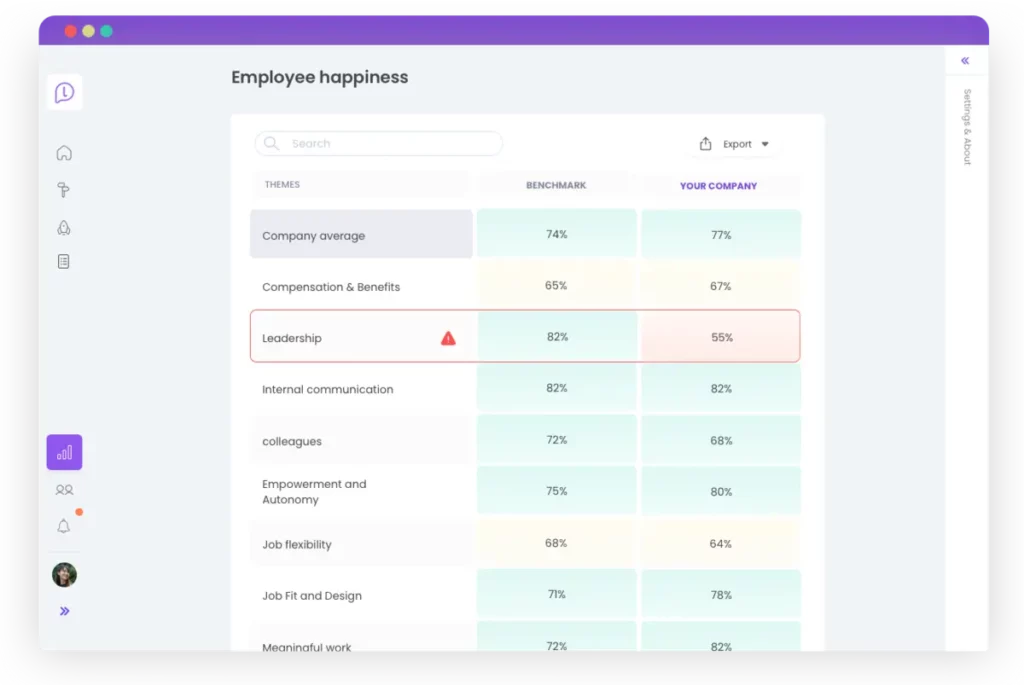
By implementing an HR cycle in your organization, you enable a continuous dialogue (Gallup, 2024). This is when the manager and employee continuously engage in conversation. Companies that maintain a continuous dialogue and provide regular, meaningful feedback experience a fourfold increase in employee engagement compared to just having the right number of office days. This emphasizes how essential giving relevant and frequent feedback is for stimulating engagement among employees (Gallup, 2024). This increased engagement leads to:
- A 26% increase in team productivity
- A 41% reduction in voluntary employee turnover
- A reduction of up to 43% in absenteeism.
3. Calibrating the evaluations
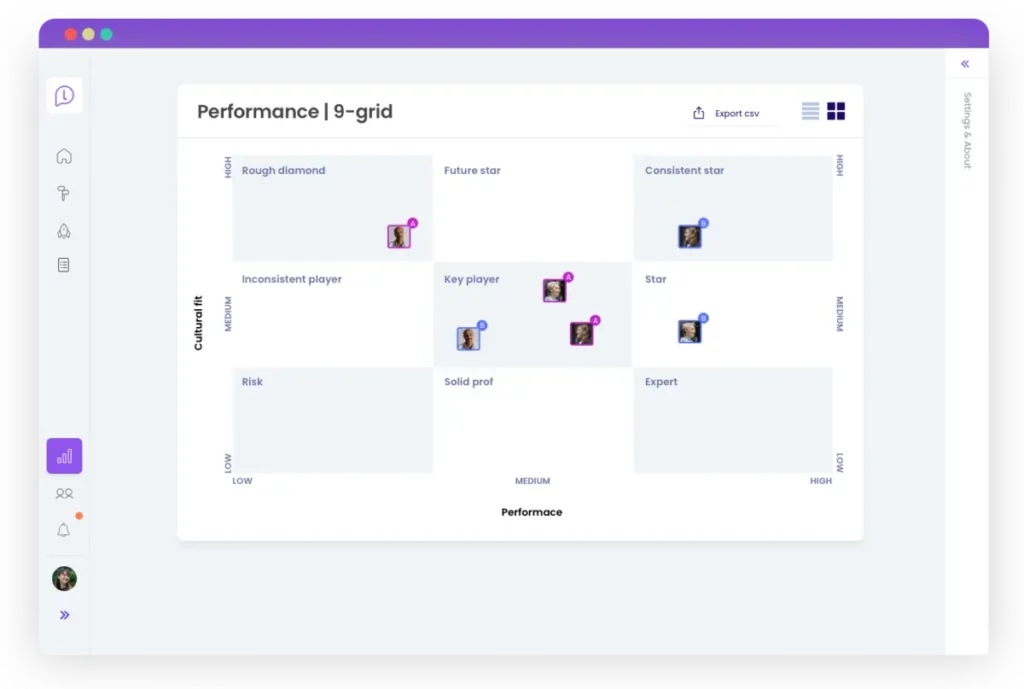
After each evaluation, it is important to calibrate the total scores (SYNDIO, 2023). An effective tool for this is the 9-grid model, in which employees are positioned relative to each other based on various themes. This model identifies low and high performers. During a calibration session, managers must substantiate their scores. Leaders discuss employee performance together, incorporating insights from colleagues who work closely with the employees in question. Often this leads to different insights than the initial score from the direct supervisor. This results in adjusted scores for a fair evaluation.
Easily conduct performance reviews
This is where Learned comes in. With our advanced performance management platform, organizations can make the transition to a continuous, goal-oriented approach to evaluation and development. With Learned, employees and managers can easily exchange feedback, set goals, and track progress in real-time. This promotes a culture of transparency, open communication, and continuous growth within the organization. Additionally, Learned provides advanced analytics and insights, enabling managers to make better-informed decisions based on objective data.
In short, the performance review doesn't have to be a stumbling block. With a continuous, goal-oriented approach and the right tools like Learned, organizations can take their performance management to the next level and create an environment where employees thrive and excel. Try Learned free for 14 days and experience what these insights can do for your organization.
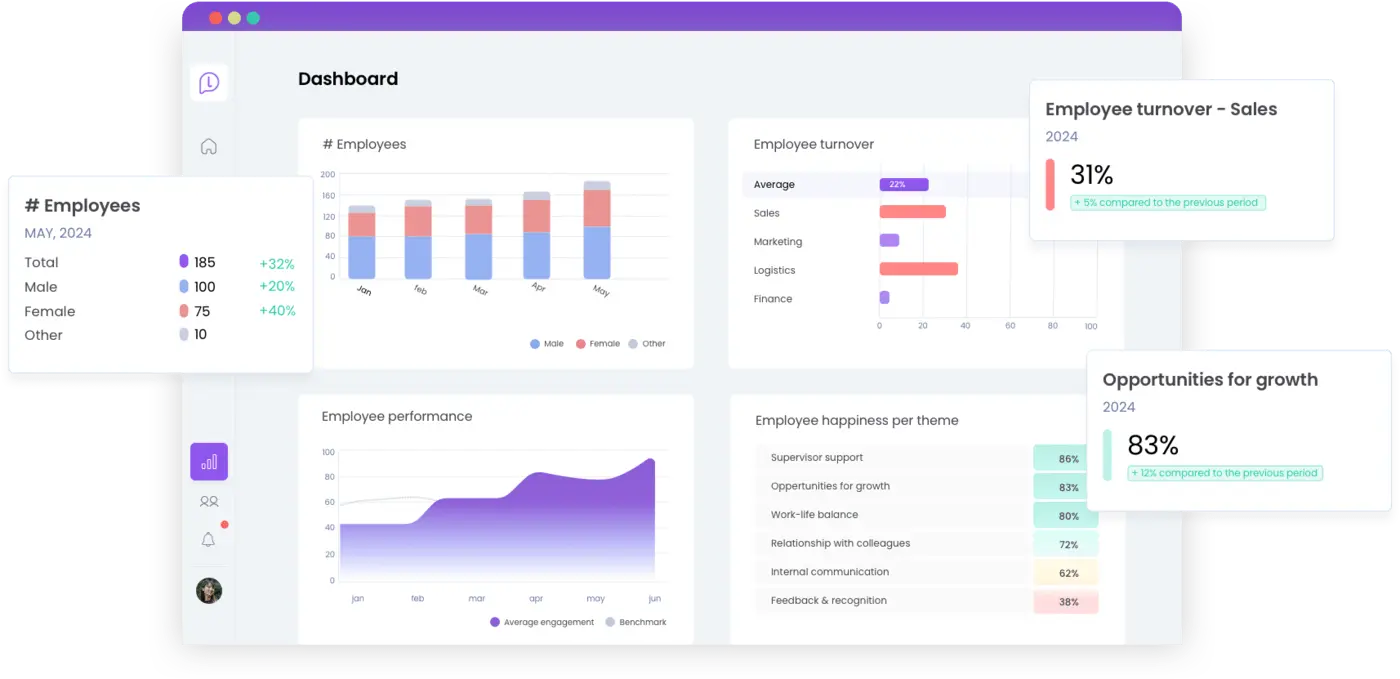
Image caption: the Learned dashboard with an overview of employee turnover, employee satisfaction, employee performance, and other important insights.
Ontvang de nieuwste HR-tips
Krijg 1 keer per maand onze tips, e-guides en templates direct in je mail.

Related articles
Discover more about this topic