

In today's rapidly changing world, it is no longer sufficient to compete solely on products and services. It is the people in an organization, and their ability to continuously develop and learn, that form the true source of competitive advantage. Creating a strong learning culture is essential for companies that want to thrive in this dynamic environment. In this blog, we will delve deeper into the importance of a learning culture within a company and how it contributes to the development and growth of both employees and the organization as a whole. A learning culture is an important part of the HR cycle. Want to design a modern HR cycle yourself? Download our free e-guide and get started right away!
The power of a learning culture
A learning culture goes beyond just training and workshops. It is a mindset that embraces learning and development as an integral part of business operations. Here are some reasons why a learning culture is so important:
- Continuous learning as the norm: In a learning culture, learning is not seen as a one-time event, but as an ongoing activity. Employees are encouraged to continuously acquire new skills and knowledge.
- Innovation and problem-solving ability: Employees in a learning culture are better able to come up with innovative solutions and tackle problems effectively. They are encouraged to ask questions, experiment, and explore new ideas.
- Talent development and retention: A learning culture attracts and retains talent. Employees feel more engaged and valued when they are given the opportunity to develop.
- Flexibility and adaptability: In a rapidly changing world, the ability to adapt quickly is crucial. A learning culture promotes the adaptability of employees and the organization as a whole.
How do you build a learning culture?
Building a learning culture requires commitment, time, and engagement at all levels of the organization. Here are some steps to consider:
- Leadership and engagement: The leadership team must emphasize the importance of learning and development and lead by example. Leaders must be actively involved in learning activities.
- Access to resources: Ensure that employees have access to the necessary resources, such as training, mentoring, and learning platforms.
- Recognition and reward: Reward and recognize employees who actively participate in learning initiatives. This can range from informal recognition to tangible rewards.
- Sharing and collaboration: Encourage knowledge sharing and collaboration. Let employees learn from each other and exchange ideas.
- Measure and evaluate: Use KPIs and metrics to track the impact of the learning culture and adjust where needed.
- Continuous improvement: A learning culture is dynamic and must be continuously improved. Listen to feedback from employees and keep adapting the culture to changing needs.
The role of technology in learning cultures
Modern technology plays a crucial role in promoting learning and development within organizations. E-learning platforms, Learning Management Systems (LMS), and advanced analytics tools can help facilitate, track, and evaluate learning activities.
Integrate a learning culture within your organization with Learned
A learning culture is the driving force behind development and growth within your company. By using the Learned platform, you can build the best performing teams through data. We also offer all kinds of tools and templates for assessing and improving the competencies of your employees.
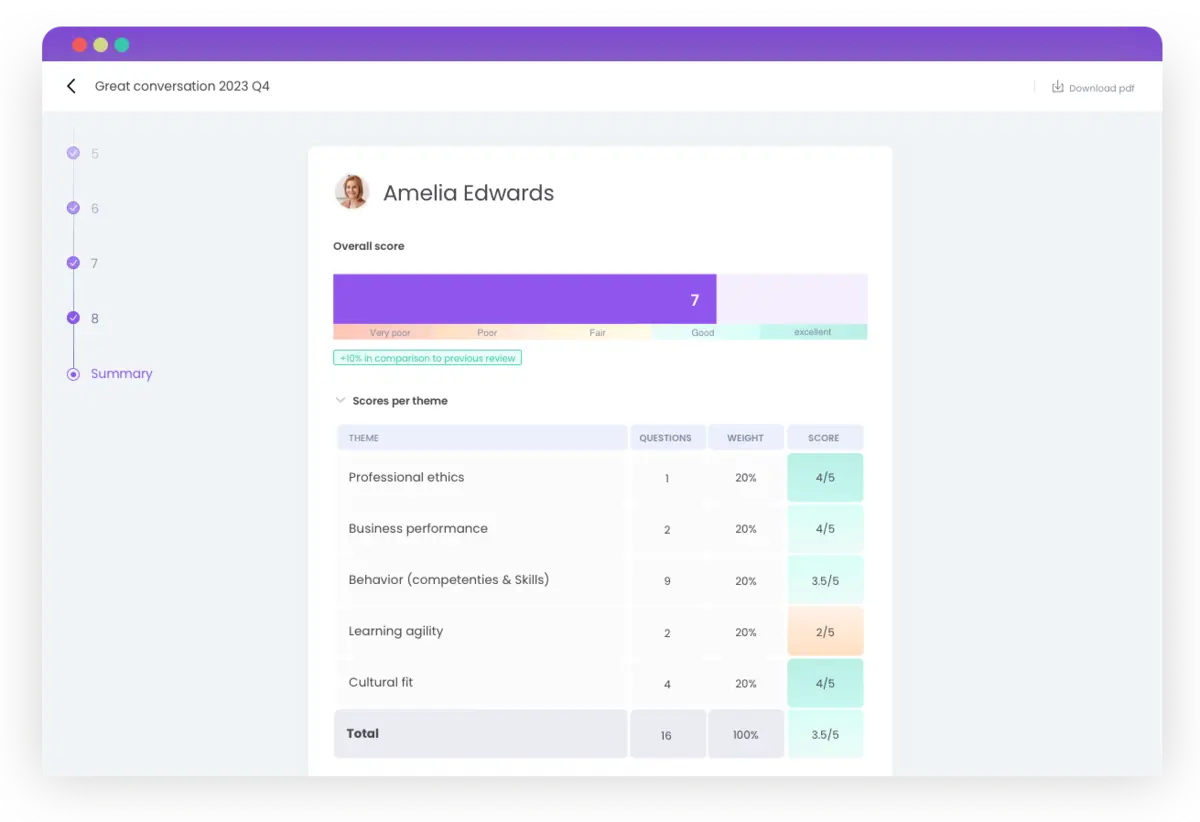
Image explanation: In each evaluation, it becomes clear how the employee scores on the various themes.
Learned facilitates objective evaluations. By creating multiple measurement moments per year based on different themes – for example: the fit with your culture and achieving goals, you gain objective insight into your low and high performers.
Ontvang de nieuwste HR-tips
Krijg 1 keer per maand onze tips, e-guides en templates direct in je mail.

Related articles
Discover more about this topic